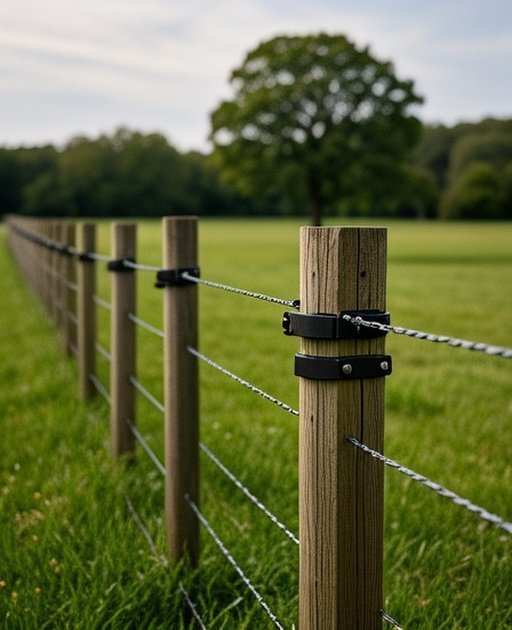
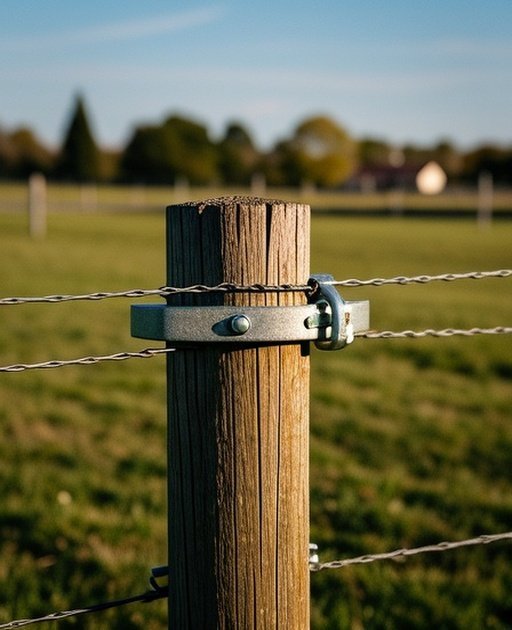
This hub does not focus on fence materials selection or cost planning—those are covered in separate guides. Instead, this page centralizes everything related to injury prevention, safe installation, voltage control, and regulatory compliance.
YouTube search query: “livestock fence safety tips electric fence safety for animals and people”
What This Guide Covers
Personal Safety During Fence Installation
Fence installation involves several significant injury risks that proper technique and equipment prevent. Post driving sends vibration through the driver into hands and arms — wear anti-vibration gloves and limit continuous driving to 20–30 minutes per session to prevent repetitive stress injury. Eye protection is essential when cutting wire or driving staples — wire ends snap back and fly unpredictably. Heavy leather gloves protect hands from wire cuts when unrolling, tensioning, and stapling wire.
Wire under tension is a stored energy hazard. High-tensile wire at 200 pounds of tension that breaks or releases suddenly can cause severe lacerations. Never stand directly in line with tensioned wire when using a fence stretcher or in-line strainer. Position yourself to the side of the wire run, not at the end where a break would send the wire toward you. Protective clothing (long sleeves, leather gloves) significantly reduces laceration severity when wire contacts occur.
Safe Working Distances from Energized Fences
A properly functioning electric fence with pulsed output is not a serious hazard to healthy adults — the shock is unpleasant but not dangerous. The main risks are unexpected shocks that cause startled falls from ladders or equipment, and contact by people with cardiac conditions who may be more vulnerable to electrical stimulation. Establish a work protocol: de-energize the fence before doing maintenance work within arm's reach of live wire.
Install a clearly labeled power cutoff switch near the energizer that can be used to de-energize the fence before entering areas for maintenance. Some operations use combination lock boxes on the energizer housing so only authorized personnel can re-energize the fence after maintenance. This is particularly important on properties where multiple people, contractors, or visitors may be working near the fence.
Wire Handling Safety
Barbed wire is one of the most injury-prone materials in agricultural use. Transport barbed wire rolls using proper tools — a spool carrier or stiff pipe through the roll center — rather than carrying bare rolls by hand. When unrolling, use a mechanical unroller that unspools the wire forward rather than trying to guide the roll by hand. Keep the wire taut during installation; loose barbed wire that tangles on the ground creates a falling hazard.
Never step over or duck under a barbed wire fence without stopping the wire from springing. Always handle barbed wire with heavy leather gloves — even through leather, barbs can penetrate during a fall or sudden movement. Keep a first aid kit with wound care supplies accessible during all barbed wire installation work. Barbed wire cuts are prone to infection because the points are often contaminated with soil and rust.
Equipment Safety: Post Drivers and Augers
Tractor-mounted post drivers and augers are high-power equipment that require operator training and attention to avoid serious injury. The PTO-driven auger is particularly hazardous — loose clothing, tool lanyards, or any item that catches on the rotating shaft can cause severe injury within seconds. Never wear loose clothing when operating PTO equipment. Keep bystanders completely clear of the operating radius.
Manual post drivers (heavy steel tubes) cause upper body strain injuries when used repeatedly without breaks. Alternate driving with other fence tasks, use two-person teams on difficult posts, and recognize the fatigue point where accuracy and safety decline. A misaligned post driver that glances off a post head can fall with significant force — maintain grip and control throughout the driving stroke.
Children and Fence Safety
Children on farming properties encounter fence hazards in ways adults don't — they may try to climb over fences, squeeze through gaps, or investigate electric fences out of curiosity. Teach children to recognize and respect fence types as part of standard farm safety education. Explain the purpose of each fence type and the specific hazards — that electric fences are designed to shock, that barbed wire cuts, and that entering livestock pastures carries animal interaction risks.
Inspect fence lines near play areas and paths children regularly use for entrapment hazards — wire gaps sized to catch small limbs or heads, protruding wire ends at child height, or gate latches children might open to enter livestock areas. Address entrapment hazards promptly rather than relying on behavior rules alone. Physical hazard elimination is more reliable than behavioral compliance for young children.
Animal Fence Injury Risks
Common livestock injuries from fencing result from entrapment, laceration, impact trauma, and electric shock complications.
Properties with public access, road frontage, or neighboring pedestrian areas should post warning signs on electric fences at regular intervals and at all points of likely contact. Signs reading 'ELECTRIC FENCE' in the specified size and format for your jurisdiction are typically required by law on public-facing electric fence runs. Install signs at eye height (5 feet) on every face of the fence visible from the public side.
For barbed wire fences adjacent to public areas, consider upgrading the public-facing sections to smooth wire electric or board fence. Barbed wire along hiking trails, roads, or public easements creates liability exposure — a member of the public who contacts barbed wire and is injured has a stronger claim than if they contacted a clearly marked electric fence.
If animals are showing signs of fence injury
Animals showing wire cuts, post abrasions, or electric shock injuries indicate a fence problem beyond normal deterrence function. Wire cuts suggest a fence with loose or low strands that livestock are pushing through rather than respecting — check fence tension and consider electric offset strands to create behavioral space. Abrasions on the face or legs indicate entrapment incidents where animals have pushed heads through mesh openings.
Electric shock injuries (burns) indicate either malfunctioning equipment delivering sustained current rather than pulses, or livestock entangled in the fence. Inspect the energizer immediately for malfunction and check for entanglement points in the fence line. A certified fence energizer delivering standard pulses should not cause burns — sustained burns indicate a non-pulsed current source or prolonged entanglement.
If You Own Horses
Barbed wire poses extreme danger to horses due to flight response behavior causing severe lacerations, tendon damage, and life-threatening injuries.
Incorrect height increases jumping injuries and escape attempts, creating safety hazards when animals attempt to clear inadequate fencing. Proper fence height varies by species—cattle require 48-54 inches, horses need 54-60 inches, and goats require 48+ inches with close spacing.
Wire spacing prevents head entrapment and leg damage—maximum 4-inch horizontal spacing for small livestock, 6 inches for larger species. Vertical spacing affects crawl-under attempts and predator access.
Voltage & Grounding
Low voltage increases escape attempts as animals learn the fence delivers ineffective deterrence. Excessive voltage creates unnecessary pain and potential health complications. Proper voltage levels range 2,000–5,000 volts depending on livestock type and coat thickness.
Grounding quality directly affects safety—poor grounding causes voltage spikes and unpredictable shock delivery. Install adequate grounding rods in moist soil, test regularly, and maintain vegetation clearance.
Establish inspection schedules—monthly for high-traffic areas, quarterly for remote sections. Address damage immediately. Document maintenance for liability protection.
Material Safety
Some fencing types flex safely under impact, others create rigid barriers causing severe injuries. Flexible materials like polymer rail absorb impact, while rigid materials like welded panels can fracture bones. Barbed wire cuts, woven wire entraps.
Material selection affects long-term injury risk more than initial cost. Consider livestock temperament—flighty horses need forgiving materials, while calm cattle tolerate rigid systems.
Legal Responsibility
Injury caused by unsafe fencing creates civil liability exposure for property owners. Demonstrable negligence in installation, maintenance, or material selection strengthens injury claims. Legal vulnerability increases with non-compliant electric systems, inadequate warning signage, or known hazards left unaddressed.
Insurance coverage varies significantly—verify your policy covers fence-related incidents. Document safety compliance and maintenance records. Understand your jurisdiction’s fence laws.
Woven wire and properly installed electric fencing are generally safest when spacing and tension are correct for the specific livestock species. Horses require smooth, visible fencing, while cattle tolerate wider material variety.
How many volts are dangerous on an electric fence?
Voltage becomes dangerous when grounding is poor causing extended contact duration, energizers exceed recommended livestock ranges, or continuous current systems are used. Properly functioning pulse systems deliver 2,000–5,000 volts safely with adequate grounding.
Can electric fences injure humans?
Yes, electric fences can injure humans, especially individuals with pacemakers or heart conditions. While standard livestock energizers rarely cause serious injury to healthy adults, always follow regulated energizer standards and install proper warning signage.
Inspect high-traffic areas and electric fence systems monthly, remote perimeter sections quarterly, and after severe weather events. Document inspections for liability protection.
Are temporary fences as safe as permanent fences?
Temporary fences present unique safety challenges including lower stability, tangling risk in netting, and inadequate grounding in portable electric systems. They require more frequent inspection than permanent installations.
Final Recommendations
Fence safety is not just about containment—it is about injury prevention, liability reduction, and long-term durability for both livestock and property owners.
Short Answer No, a properly designed and correctly operated electric fence will not kill livestock. Electric fencing delivers short, low-energy pulses intended to cause discomfort…
Short Answer Yes, electric fencing can be highly effective for mixed livestock when properly designed and maintained. It works best as a psychological barrier that…
Short Answer Yes, electric fencing is generally safe for animals when it is properly designed, installed, and maintained. Modern electric fences deliver a short, non-lethal…
YouTube search query: “livestock fence safety tips electric fence safety for animals and people”
Explore More Fencing Guides
Find the right fence for your farm — browse by livestock type, material, or project need.