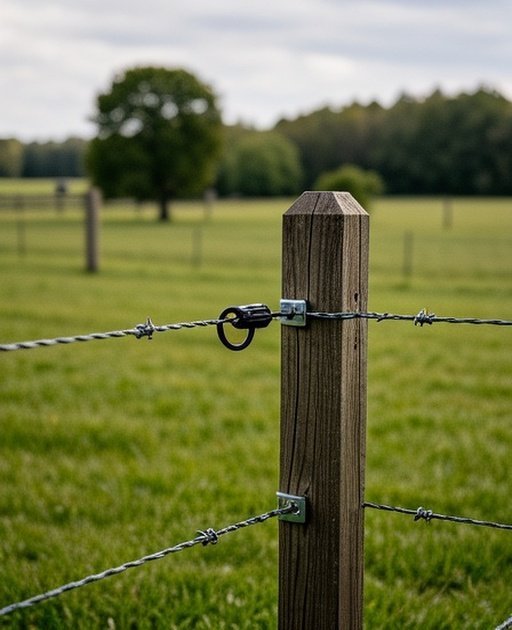
Horse fencing prioritizes safety, visibility, and injury prevention above containment strength alone, distinguishing it fundamentally from cattle or goat fencing systems. Material selection directly affects injury risk, with smooth surfaces, appropriate spacing, and high visibility reducing accidents from impact, entanglement, or panic responses. Understanding proper horse fence height, safe material choices, and behavioral considerations helps owners create secure environments protecting valuable animals from preventable injuries. Whether managing breeding stock, performance horses, or recreational animals, proper fence design balances containment effectiveness with accident prevention across diverse property types and management scenarios.
Watch: Step-by-step horse fence installation and safety guide.
What This Guide Covers
What type of fencing is safest for horses?
Horse safety begins with material selection. The safest fencing options share three qualities: smooth surfaces that don't cut or puncture, adequate visibility so horses can see the barrier before making contact, and enough flexibility to absorb impact without shattering. Wood board rail fencing has been the gold standard for decades because it meets all three criteria — horses can see it clearly, it won't snag or cut, and a struck board typically breaks rather than impaling the animal. Three- or four-board configurations with 4×4 pressure-treated posts set 8 feet apart remain the most common choice for high-value horses.
Modern alternatives have closed the gap significantly. High-quality woven wire with smooth horizontal wires and no-climb mesh (2×4 inch or 2×6 inch openings) prevents hoof entrapment while lasting 20–30 years with minimal maintenance. Vinyl and composite rail systems offer wood's visibility and smooth surface without painting or rot, though they cost 40–60% more upfront. What to always avoid: barbed wire (causes severe lacerations during panic responses), high-tensile wire without visibility tape (horses run through it), and chain-link (legs get trapped in diamond openings).
The hidden safety factor most owners overlook is fence height relative to top-rail clearance. A safe fence keeps horses away from the boundary — if a horse can comfortably rest its chin on the top rail, it will. Standard recommendation is 54–60 inches minimum, with the top rail set so horses can't reach over and get their neck or leg caught between fence elements.
What fence height is recommended for horses?
Minimum recommended height for horse fencing is 54 inches (4.5 feet) for standard Quarter Horse and Thoroughbred breeds, but 60 inches (5 feet) is the safer target for most operations. Height serves two purposes: it prevents jumping attempts and creates a psychological barrier horses respect. A fence a horse could clear — even if it rarely tries — creates a management risk that compounds over time, especially when horses are spooked, in season, or separated from herd mates.
Athletic breeds like Warmbloods, Thoroughbreds used for jumping, and stallions typically require 60–66 inch fencing. Miniature horses present the opposite problem — standard fencing is too tall for effective psychological deterrence, and bottom rail spacing becomes critical to prevent foals from slipping through. For minis, 42–48 inch fencing with tight bottom rails spaced no more than 4 inches from ground works well. Cross-fencing that separates paddocks between horses should match or exceed perimeter fence height, since horses push boundaries most aggressively when trying to reach other animals.
Is electric fencing safe for horses?
Electric fencing is safe and highly effective for horses when installed correctly — in fact, many professional equestrians consider a single strand of properly energized electric tape at chest height to be more reliable than physical fencing alone, because horses learn to respect it quickly. The key difference from cattle applications is visibility: horses must be able to clearly see the wire or tape before making contact. Poly tape (2-inch wide) or polyrope performs far better than thin wire in horse pastures precisely because of this visibility requirement.
Training is essential before relying on electric fencing as a primary barrier. Walk horses along an energized fence on a lead rope so they can investigate and receive a safe correction while you maintain control. A single negative experience in a controlled setting creates respect that lasts years. Never use electric wire alone as a perimeter fence — combine it with visible physical fencing. The best combination is wood or vinyl rail with a single electric offset strand running inside the fence line at chest height, which keeps horses from leaning on and eventually damaging expensive rail systems.
Voltage requirements for horses are lower than cattle: 2,000–3,000 volts is sufficient for trained horses, while cattle may need 4,000+ volts. Use a low-impedance energizer sized for the fence length (not just acreage), check ground rod installation, and test monthly. Wet vegetation shorting the fence to ground is the most common cause of failure.
Woven wire vs. board rail fencing for horses
The woven wire vs. rail debate comes down to your specific situation: number of horses, budget, predator pressure, and maintenance capacity. Board rail excels in visibility, aesthetics, and the way it "telegraphs" to horses that a boundary exists — horses rarely test wood rail once they've encountered it. Three-board configurations cost $12–$18 per linear foot installed, four-board runs $18–$28. The drawback is ongoing maintenance: boards crack, warp, and need repainting or replacement every 8–12 years.
Woven wire (specifically no-climb horse fence, also called field fence) costs $8–$14 per linear foot installed and lasts 20–30 years with proper tensioning. It provides predator exclusion wood rail cannot match — a real advantage for properties with coyotes, dogs, or mountain lions. The downside is that improperly installed woven wire sags, creating pockets where horse legs can become trapped. Horizontal spacing should be tight enough (2×4 inch maximum openings for foals) to prevent hoof insertion. Always add a top board or top rail above woven wire — this improves visibility and prevents horses from pushing the top wire down.
Wire spacing to prevent leg injuries
Wire spacing is the most technical and most overlooked aspect of horse fence safety. The danger zone for wire openings is 3–8 inches — large enough for a horse hoof or lower leg to enter, but too small to exit without the horse pulling back and panicking. This creates a dangerous thrashing situation that can result in severe tendon and bone injuries. The safe zones are openings under 3 inches (too small to enter) or over 8 inches (easy to exit). Standard 2×4 inch no-climb woven wire achieves the "too small to enter" safety target.
Horizontal wire strands (as in smooth wire configurations) should be spaced so the bottom strand sits 4 inches or less from the ground, preventing legs from sliding under, with subsequent strands 6–8 inches apart. The common 4-strand smooth wire fence with strands at 12, 24, 36, and 48 inches creates the worst possible leg-trap scenario for horses and should never be used in horse applications. If inheriting a property with existing wire fencing, adding a bottom board at ground level and filling the mid-section with no-climb mesh is a cost-effective safety upgrade.
What type of fencing is safest for horses?
Horse fence safety depends on material smoothness, visibility, and flexibility absorbing impact without causing entanglement or puncture injuries.
Paddocks and dry lots adjacent to barns experience far more horse contact than pasture perimeters — horses pace fence lines, lean over top rails to reach hay, and are confined at higher densities. These areas justify premium fencing materials regardless of budget constraints elsewhere. Three- or four-board wood rail, vinyl rail, or welded pipe (pipe corral panels) are the appropriate choices. Avoid woven wire in high-traffic paddocks: repeated contact loosens staples, creates sags, and puts wire within reach of horses who will catch legs in it.
Post spacing tightens in high-contact areas. Standard 8-foot spacing works for pastures, but drop to 6 feet in paddocks and 4–6 feet at corners where horses congregate. Corners should be slightly rounded — avoid 90-degree inside corners where horses can get pinned or kicked into the fence. Many barn managers cap inside corner posts at breast height and angle the adjacent boards to create soft corners.
Large pastures and perimeter fencing
Cost per linear foot dominates large pasture decisions, and the math changes dramatically at scale. Fencing a 10-acre square pasture (roughly 2,640 linear feet) with four-board wood rail costs $47,000–$74,000 installed. The same perimeter in no-climb woven wire with a top board runs $24,000–$40,000. High-tensile electric with poly tape and T-posts can cover the same ground for $6,000–$10,000, though it requires proper horse training before relying on it.
For large properties, the practical solution is hybrid fencing: premium board rail or vinyl for the 200–400 feet of frontage along roads and driveways (visibility and property value), then woven wire or high-tensile electric for back pasture perimeters. This achieves the right cost-to-safety balance while keeping the property looking professional from the road. Internal cross-fencing that divides pastures can use lighter-duty options since horses face it from both sides simultaneously, creating mutual deterrence.
Stallion and breeding facilities
Stallion containment requires the most robust fencing on any property — both for safety and liability. A determined stallion can generate over 2,000 pounds of force against a fence when motivated by a mare in season. Minimum specifications are 60-inch height, 6-foot post spacing, 6×6 posts (not 4×4), three or four boards that are 2 inches thick (not 1-inch), and hot-dipped galvanized hardware. Many professional breeders add electric offset strands at chest height to create a "stay back" zone, preventing stallions from applying sustained force to the physical fence.
Double-fencing stallion paddocks adjacent to mare pastures is standard practice at professional operations: a 10–12 foot gap between paddock boundaries prevents physical contact between animals while eliminating the fence-fighting behavior that damages both animals and fencing. The cost of double-fencing is quickly offset by reduced fence repair and veterinary bills from wire cuts and kick injuries.
Properties with predator pressure
In areas with coyotes, domestic dogs, or larger predators like mountain lions or bears, horse fencing priorities shift. Adult horses are rarely at serious risk from coyotes — their size and hooves provide natural deterrence — but foals, miniature horses, and horses in compromised health are vulnerable. No-climb woven wire (2×4 inch mesh) extending to the ground prevents predator entry while keeping livestock in. This mesh is also significantly more effective than board rail or smooth wire at excluding stray dogs, which are statistically responsible for more livestock injuries than wildlife in most regions.
For high-risk areas, adding a single strand of electric fencing on the outside of physical fencing, 8 inches from the ground and 8 inches out from the fence line, creates an effective predator deterrent without modifying the primary fence. This "offset exterior electric" approach is standard in sheep and goat operations and transfers well to horse facilities with foaling pastures or valuable breeding stock.
Proper horse fence design requires balancing safety, containment effectiveness, and long-term durability across four critical dimensions: height and visibility, injury prevention, material strength, and installation quality. Each factor influences the others — a fence that's tall enough but poorly installed fails just as surely as one that's well-built but too low. This section covers the design decisions that most directly affect how well your fence protects horses and holds up over time.
Fence Height & Visibility
Proper horse fence design prioritizes both adequate height preventing jumping and clear visibility allowing horses to recognize boundaries before contact. Minimum heights of 54-60 inches contain most horses effectively while visibility features including substantial top rails, contrasting colors, or white surfaces prevent collision injuries. Thin wire systems create visibility challenges particularly in low light or for horses running at speed across pastures. Wood rail fencing provides optimal visibility through substantial profile and natural color contrast against landscape features, though modern alternatives including white composite rails achieve similar recognition benefits.
Safety & Injury Prevention
Horse fence safety encompasses preventing puncture wounds, entanglement injuries, and impact trauma through careful material selection and proper installation. Smooth wire surfaces eliminate barb-related injuries while appropriate spacing prevents hoof or leg entrapment creating panic situations. Flexible materials including certain woven wire systems and composite rails absorb impact force better than rigid wood boards that splinter when struck. Proper fence design eliminates protruding fasteners, sharp edges, and structural irregularities horses could contact during normal fence interaction or panic responses.
Material Strength & Flexibility
Fence materials vary dramatically in ability to absorb impact without breakage while preventing penetration injuries during high-force collisions. Wood rail provides traditional aesthetics but splinters under severe impact, while properly installed woven wire flexes absorbing force then returns to tension. Modern composite materials resist both weather degradation and impact damage though typically cost significantly more than traditional alternatives. Understanding material properties including tensile strength, impact absorption, and failure modes helps match fencing systems to specific horse temperaments and property requirements.
Installation & Post Spacing
Proper post spacing maintains fence stability and wire tension preventing sagging that creates escape opportunities and injury hazards. Standard horse fencing uses 8-12 foot post intervals depending on material type, terrain, and expected pressure from horses leaning or testing boundaries. Closer spacing increases material costs but improves structural integrity particularly for woven wire systems requiring consistent tension. Corner posts and gate locations demand reinforced bracing handling concentrated stress from fence line tension and operational use throughout system lifespan.
Cost vs Long-Term Durability
Horse fence investment decisions must balance upfront material costs against ongoing maintenance expenses and eventual replacement needs over decades of use. Premium materials including composite rail or heavy-gauge woven wire typically cost 2-3 times more than basic wood systems but eliminate painting, board replacement, and frequent repairs. Budget analysis should account for labor availability, property size affecting total project scope, and whether saved maintenance time justifies higher initial investment. Small properties may prioritize appearance and safety over cost efficiency while large operations require economical solutions covering extensive perimeters.
Related Fence Systems
Horse fencing decisions benefit from understanding alternative livestock containment approaches and specialized installation techniques. Electric Fence Installation provides guidance for incorporating electric deterrence either as standalone systems or combined with physical barriers. Fence Planning Basics establishes comprehensive layout strategies applicable across livestock types including horses. Fence Cost & Budgeting helps allocate resources effectively balancing safety requirements against available investment. Woven Wire Field Fence covers installation techniques for mesh-style horse fencing. Cattle Fencing Guide addresses fundamentally different containment priorities from larger, less injury-prone livestock.
Frequently Asked Questions
What is the safest fencing material for horses?
Wood rail, properly installed woven wire with smooth surfaces, and modern composite materials provide safest horse containment through visibility, smooth surfaces, and appropriate flexibility. Avoid barbed wire entirely for horses due to severe injury potential from entanglement or panic responses near sharp barbs.
How tall should a fence be for horses?
Standard horse fencing should measure 54-60 inches in height for most breeds and temperaments. Athletic horses, jumpers, or stallions may require heights toward the upper range or beyond, while miniature horses can be safely contained with shorter barriers.
Can horses break electric fences?
Horses can break through electric fencing when running at speed, particularly if untrained to respect electric deterrence or if vegetation shorts reduce voltage below effective levels. Combining electric wires with visible physical barriers provides more reliable containment than electric systems alone.
What fence spacing prevents leg injuries?
Wire spacing should be either very tight (4 inches or less) preventing hoof insertion or quite wide (8+ inches) allowing easy withdrawal if contact occurs. Intermediate spacing of 5-7 inches creates dangerous entrapment situations where hooves enter but cannot extract without struggle.
Is barbed wire safe for horses?
Barbed wire is not recommended for horses under any circumstances due to severe injury potential. Horses panic when entangled, creating lacerations and potentially catastrophic injuries requiring veterinary intervention. Numerous safer alternatives exist for horse containment across all budget ranges and property types.
Final Recommendations
Horse fencing success prioritizes safety and visibility over simple containment, requiring materials and designs preventing injuries from impact, entanglement, or panic responses. Wood rail provides traditional aesthetics and optimal visibility though demands ongoing maintenance including painting and board replacement. Woven wire with smooth surfaces offers lower long-term maintenance combined with predator protection when properly installed without sharp edges. Modern composite materials justify premium pricing through decades of maintenance-free service ideal for small facilities where appearance and time savings outweigh cost considerations.
Avoid barbed wire entirely for horse applications regardless of cost savings, as injury risks and veterinary expenses far exceed fence material differences. Base height selection on breed size and individual temperament, with athletic horses or stallions requiring enhanced specifications beyond standard recommendations. Review comprehensive resources including safest fencing materials, cost comparisons, and height and spacing guidelines ensuring proper planning before material purchase or installation begins.
Short Answer Yes, electric fencing is safe for horses when it is properly installed, visible, and functioning correctly. It works as a psychological barrier rather…
Short Answer Yes, horses typically need both perimeter fencing and cross fencing, but they serve different purposes. Perimeter fencing provides the primary safety and containment…
Explore More Fencing Guides
Find the right fence for your farm — browse by livestock type, material, or project need.