This page focuses on layout design and system planning—not detailed installation techniques or specific material cost comparisons covered separately. For comprehensive property planning methodology, review the Fence Planning Basics guide before implementing rotational systems.
A rotational grazing system divides available pasture into multiple paddocks, moving livestock through them on a schedule that allows forage plants to recover fully before re-grazing. The basic design parameter is the number of paddocks: divide total rest period (the time forage needs to recover) by the grazing period per paddock (typically 3–7 days) to get the minimum number of paddocks. For a 42-day rest period with 6-day grazing periods, you need at least 7 paddocks.
Paddock shapes don't need to be perfectly rectangular — irregular paddocks matching terrain features (following ridgelines, excluding wet areas) often work better than geometrically perfect layouts. What matters is approximate area equality so that each paddock holds the herd for the same number of days. Irregular areas can be adjusted by moving temporary interior fence to balance grazing days between paddocks with different productivity.
Cross-Fencing for Rotational Grazing: Permanent vs Temporary
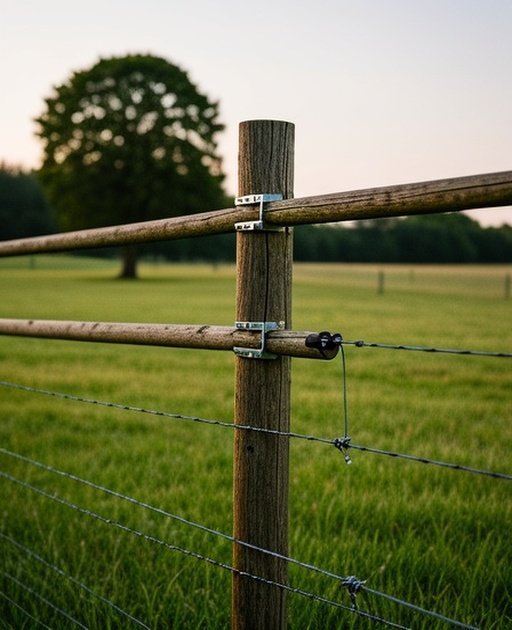
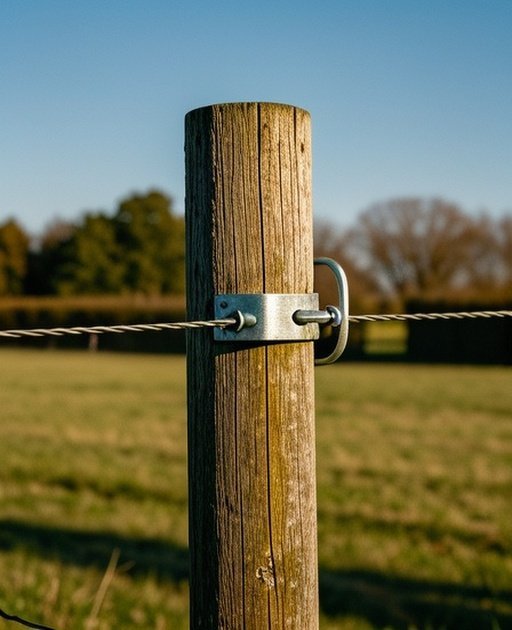
Permanent cross-fencing requires significant upfront investment but provides durable, reliable paddock division that functions without power or daily attention. Standard permanent cross-fence for rotational grazing is a 2-strand high-tensile electric fence on wooden posts at 300-foot intervals with T-posts between — sufficient to contain trained cattle at a cost of $1.00–$2.00 per linear foot. Install mainline water infrastructure before permanent cross-fencing to avoid crossing permanent fence lines with water pipe trenches.
Temporary electric cross-fencing using polywire on step-in posts offers flexibility that permanent systems cannot match. Paddock boundaries can be moved to match actual forage productivity (expanding paddocks where grass is slow, contracting where it's abundant), adjusted seasonally, or completely reconfigured as the operation changes. The entire paddock system for a 50-acre pasture can be moved by one person in a morning. The tradeoff is daily monitoring requirement and lower durability than permanent systems.
Water Access in Rotational Grazing Paddocks
Water access is the most critical infrastructure element of rotational grazing — cattle will not graze evenly in a paddock if water is only available in one corner, defeating the purpose of paddock rotation. The ideal system provides water access from a central point that all paddocks can reach, using a wagon wheel spoke layout for cross-fencing that radiates from a central water area. This allows each paddock to contain access to the central water without requiring full water infrastructure in every paddock.
Where the spoke layout isn't practical, portable water tanks connected to a mainline water line with quick-connect hydrants at each paddock provide water where needed. The mainline pipe runs from the permanent water source along the perimeter fence, with hydrant outlets at 300–500 foot intervals. A portable tank (50–100 gallon rubber trough) moves with the herd and connects to the nearest hydrant via a garden hose. This system requires animal density planning so that portable tank capacity meets daily water demand.
Paddock Sizing for Different Herd Sizes
Paddock area should match herd size and target grazing duration. The calculation: (herd daily forage demand in lb dry matter) / (available forage per acre in lb dry matter) = acres needed per grazing day × target grazing days = paddock size. For a 50-head cow-calf herd (50,000 lb total weight × 2.5% dry matter = 1,250 lb/day demand), in a pasture with 1,500 lb/acre available forage, each paddock needs 1,250/1,500 = 0.83 acres per grazing day × 5 days = 4.2 acres minimum.
In practice, most producers use paddock sizes that feel intuitive based on experience — forage and animal condition monitoring adjusts grazing time rather than exact paddock sizing. Move cattle when the paddock reaches 3–4 inches of residual height (don't graze below this to protect root reserves). Extend the rotation when forage growth slows in drought; compress the rotation when spring flush growth outpaces the herd's consumption.
Lane Systems for Livestock Movement
A lane system connecting all paddocks to water, working facilities, and loading areas simplifies livestock management in rotational grazing systems. The main lane (typically 20–30 feet wide) runs through the property with paddock gates along its length, allowing livestock to walk to and from any paddock without moving through other paddocks. This is particularly valuable during weaning, health treatment, or when moving only part of the herd.
Lane fencing can be simpler construction than paddock perimeter fencing since livestock are only in the lane briefly during moves and can be accompanied during movement. Two-strand high-tensile electric on T-posts at 30-foot spacing is adequate lane fencing in most situations. Wide lanes also serve as sacrifice areas or feedlot areas during muddy conditions when pasture access would cause damage to the soil and forage stand.
What Is Rotational Grazing?
Rotational grazing system design divides pastures into paddocks where livestock graze intensively for short periods (1-7
If you're converting continuous grazing to rotational
Converting from continuous to rotational grazing on existing pasture requires a transition period where forage plants recover from previous overgrazing. Install cross-fencing during the dormant season (late fall or winter) when ground is firm and forage isn't actively growing. Plan for reduced stocking density during the first one or two rotations while pasture productivity improves. Most operations see measurable forage improvement within one to two full grazing seasons.
Start with a simple 4–6 paddock system rather than an elaborate 12-paddock design — simpler systems are easier to manage and still produce significant improvement over continuous grazing. Expand to more paddocks in subsequent years as the management routine becomes familiar. The management skill of reading forage and animal condition and making move decisions develops faster than the fencing can be built anyway.
If water access is limiting paddock layout options
Water access constraints sometimes dictate paddock layout more than forage distribution. When existing water sources are in fixed locations, design paddocks so that each paddock borders the water source, even if this creates irregular paddock shapes. Alternatively, invest in a central lane with water access before installing cross-fencing — the lane investment enables any paddock layout rather than constraining design around existing water points.
Gravity-fed water systems from elevated tanks allow water delivery to remote paddocks without electrical pumping infrastructure. A tank elevated 20–30 feet provides adequate pressure (9–13 PSI) for water line delivery across typical farm distances. Solar-powered pumping systems from wells or ponds provide another option for remote water access where gravity systems aren't feasible.
If You Want Low-Cost Rotational Setup
Low-cost rotational systems prioritize portable electric fencing minimizing initial investment while providing functional paddock divisions.
Interior cross fencing typically runs 6-12 inches shorter than perimeter systems because trained livestock respect familiar boundaries—cattle fencing interior divisions use 42-48 inch heights versus 48-54 inch perimeter, while sheep fencing interior maintains 48 inches due to smaller size and agility. Wire spacing standards depend on species and fence type—high-tensile systems for cattle tolerate 12-16 inch spacing while goat containment demands 6-8 inch maximum preventing escapes. Species-specific height and spacing standards affect material quantities and costs significantly impacting total per-acre investment.
Energizer Output & Grounding
Electric fence grounding systems prove critical for rotational grazing effectiveness—inadequate grounding creates inconsistent voltage allowing livestock through divisions compromising rotation schedules. Energizer sizing must account for total fence length including interior divisions—8 paddocks on 40 acres may require 2-3 miles of hot wire needing 1-2 joule energizers depending on vegetation load and soil conditions. Proper grounding installation using multiple 6-8 foot rods ensures consistent shock delivery across extensive interior fence networks. Poor grounding particularly affects drought-prone areas with dry soils reducing conductivity.
Gate Placement & Access Flow
Strategic gate location dramatically affects rotational grazing efficiency—poor placement creates bottlenecks, increases handling time, and complicates daily livestock moves between paddocks. Fence planning basics emphasize positioning gates at natural livestock gathering points, ensuring adequate lane width for cattle movement (12-16 feet minimum), providing vehicle access for hay delivery and maintenance, and minimizing total gate quantity balancing convenience with cost. Hub-and-spoke layouts concentrate gates at central facilities while parallel lane designs require gates accessing each paddock from shared lanes. Gate planning influences long-term operational labor requirements significantly—well-designed systems enable single-person livestock movement while poor layouts demand multiple handlers.
Long-Term Maintenance Strategy
Rotational systems increase maintenance demands through greater total fence length and more complex infrastructure requiring regular inspection and upkeep. Annual fence maintenance costs for 8-paddock rotational systems run 2-3x perimeter-only operations through additional electric fence vegetation control, more gates requiring lubrication and hinge maintenance, increased wire tension monitoring, and energizer testing. Temporary systems trade installation flexibility for higher maintenance frequency—moving divisions weekly creates equipment wear requiring periodic replacement. Budget 3-5% of initial fence investment annually for maintenance reserves. Long-term cost planning must account for these ongoing expenses beyond installation.
Legal & Boundary Compliance
Interior cross fencing typically avoids regulatory scrutiny unlike perimeter installations, but certain situations require consideration of local fence laws and regulations. Electric fencing legality varies by zone—residential or mixed-use properties may restrict visible electric systems even for interior divisions. Warning signage requirements sometimes extend to interior fences near public trails or shared boundaries. Rotational grazing systems affect shared boundary fencing when interior divisions terminate at property lines creating maintenance access issues. Verify permit requirements for extensive interior fence projects particularly in suburban transitional zones with livestock restrictions.
Effective rotational grazing systems typically begin with 4-8 paddocks for beginners learning management principles, advancing to 8-16 paddocks for intermediate operations balancing complexity with benefits, and 16+ paddocks for intensive management maximizing forage utilization. Paddock numbers depend on desired rest periods, stocking density, and forage growth rates—longer rest periods (30-45 days) require more subdivisions than short rotations (14-21 days).
Temporary cross fencing suits operations experimenting with rotational grazing, requiring maximum paddock flexibility, or minimizing initial investment, while permanent systems benefit fixed layouts, high livestock pressure, and situations prioritizing minimal daily management over installation flexibility. Many successful operations combine both—permanent perimeter and primary lanes with temporary subdivisions providing seasonal adjustment capability as forage production and livestock needs fluctuate throughout the year.
Do I need predator fencing inside paddocks?
Interior predator fencing proves unnecessary when secure perimeter boundaries exclude threats—interior divisions focus solely on livestock containment and grazing management rather than predator deterrence. However, vulnerable periods (lambing, kidding, calving) benefit from concentrating animals in paddocks near facilities where enhanced monitoring and intervention provide protection without upgrading all interior fencing to predator-proof standards significantly increasing costs.
Final Recommendations
Rotational grazing through strategic cross fencing dramatically improves pasture productivity and livestock performance when properly designed and managed. Begin with secure perimeter boundaries before implementing interior divisions, start simple with 4-6 paddocks proving benefits before expanding complexity, and prioritize water access and gate placement affecting daily operational efficiency. Temporary electric systems minimize initial investment while providing learning opportunities before committing to permanent infrastructure.
Comprehensive planning using Fence Planning Basics methodology integrates rotational systems with property topography, livestock species requirements, and operational goals. Financial analysis through Fence Cost & Budgeting guides balances upfront investment against long-term productivity gains and reduced hay expenses. Material selection comparing permanent versus temporary options optimizes return on investment while maintaining adequate functionality for successful rotational grazing management improving both land and livestock health.
Short Answer The best fence layout for rotational grazing is a perimeter fence enclosing the entire property, combined with multiple interior cross fences that divide…
Sheep Fencing Guide Overview Sheep fencing is designed to contain sheep safely while protecting them from predators and preventing escape. Because sheep are agile, curious,…
Electric Fence Safety & Voltage Guide Overview Electric fence safety and voltage management are critical for livestock containment, predator deterrence, and human protection. An electric…
Explore More Fencing Guides
Find the right fence for your farm — browse by livestock type, material, or project need.