Goat Fencing Guide
Overview
Goat fencing requires materials and design that prevent escape, deter predators, and withstand goats’ agility and climbing behavior. This guide explores fence types, height and spacing requirements, cost factors, and installation planning tailored for goat operations of all scales. Whether managing backyard herds or large pasture systems, understanding goat-specific fencing needs helps you choose materials that contain persistent escape artists while protecting vulnerable animals from predator threats. Proper fence selection prevents costly repairs and reduces livestock losses across diverse terrain and management scenarios.
Watch: Goat fencing installation and predator protection tutorial.
What This Guide Covers
What type of fencing works best for goats?
Goats are widely acknowledged as the most challenging livestock to fence. They are intelligent, curious, and highly motivated to test any weakness — they push under, squeeze through, climb over, and exploit gaps other animals ignore. The most effective goat fencing is no-climb horse fence (2×4 inch mesh) or fixed-knot field fence with tight bottom spacing, standing at least 48 inches tall with the bottom wire touching the ground. Anything with openings larger than 4 inches will eventually let a goat through.
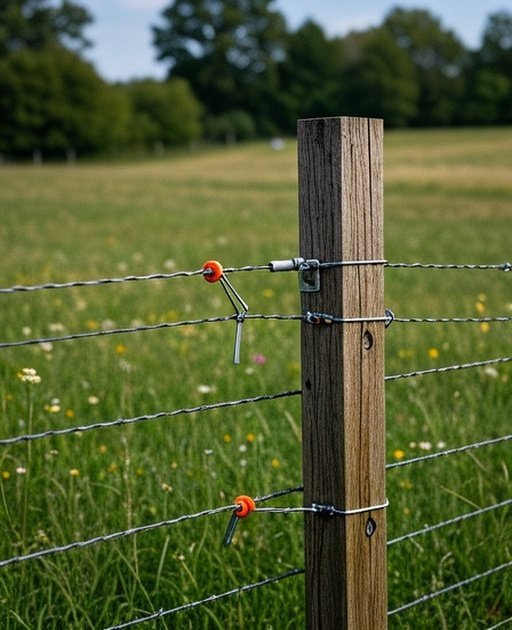
Electric fencing adds a behavioral layer that dramatically improves any physical fence's effectiveness. A single strand of electric at nose height (12–18 inches for standard breeds) inside any fence perimeter trains goats to stay back from the physical barrier. Without this offset electric strand, goats climb, push, and eventually defeat even well-built woven wire. Budget at least $6–$9 per linear foot for quality goat fencing that lasts.
How high should goat fencing be?
Minimum goat fence height is 48 inches for most dairy and meat breeds — Nubians, Boers, and Spanish goats. Nigerian Dwarfs can be contained at 42 inches in some cases, but 48 is safer. Breeding bucks and athletic does in dairy operations often require 54–60 inch fencing because they will jump any fence they can clear when motivated. Never underestimate a determined buck; 60 inches is the practical maximum needed for even the most athletic goat breeds.
Fence climbing is as much a problem as jumping. Goats use horizontal rails and wire strands as ladder rungs. Woven wire with smaller mesh spacing at the bottom (no-climb or 2×4 inch) eliminates the footholds that allow climbing. Avoid using wood board fencing, t-post designs with horizontal rails, or loose wire that creates climbing opportunities — these are effectively goat ladders.
How do you stop goats from escaping under fences?
Goats escape under fences when the bottom wire is more than 4 inches from the ground. The simplest fix is to run the bottom wire tight to the ground surface or stake it down with ground staples every 4–6 feet. On uneven terrain, fill dips with the wire staked down, creating smooth ground contact. Some producers add a bottom board or a strand of electric at 6 inches from the ground to discourage rooting under.
Seasonal frost heave in northern regions lifts fence posts and creates bottom gaps in spring. Check the entire perimeter after winter and re-tension or re-stake low spots before goats discover them. Young kids are especially prone to escaping under fences — inspect fencing before kidding season and close any gap larger than 3 inches.
Electric fencing for goats
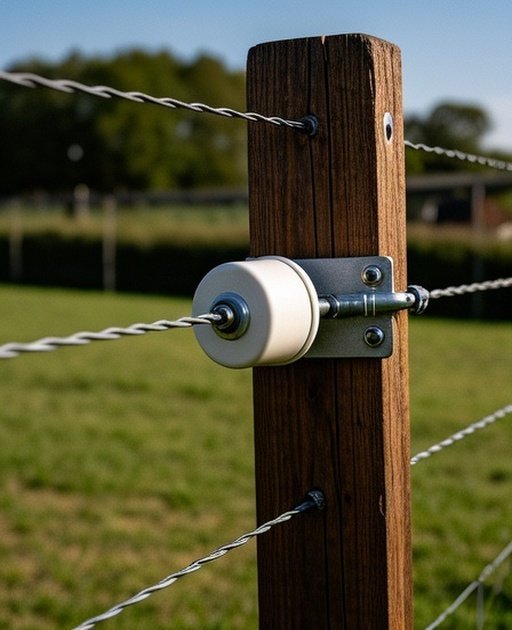
Electric fencing is highly effective for goats when voltage is adequate — minimum 4,000 volts under load, ideally 5,000–7,000 volts. Goat's hair insulates them from lower voltages, so undersized energizers fail to deter. Use a low-impedance energizer, test voltage weekly during the grazing season, and keep vegetation from shorting the fence. The most reliable setup: 2×4 inch no-climb woven wire with electric offset strands inside at 10 and 24 inches from ground.
Training goats to electric fence before relying on it prevents breakouts when animals are new to the system. In a controlled area with a gate, energize the fence and let goats investigate naturally. A single strong correction creates lasting respect. Never use electric fence as the sole barrier for goats — combine with physical fence. Electric alone fails when the power is interrupted, vegetation shorts the system, or animals are motivated enough to push through one shock.
What wire spacing prevents goats from escaping?
The critical specification is openings no larger than 4 inches in any direction. Standard field fence with 6×6 inch bottom spacing allows younger goats to push through headfirst and get stuck — or escape entirely. No-climb horse fence (2×4 inch openings) is the safest choice but costs more. Fixed-knot goat fence (6-inch spacing with tighter knots that don't slip) is a middle-ground option that works well for adult goats in most situations.
Height of the bottom wire matters as much as mesh spacing. Run the bottom wire touching the ground or within 2 inches. Stake low-tension sections to the ground with ground anchors every 4 feet. Corners and gates are the most common escape points — install corner bracing properly and ensure gates close tightly with no gaps. A gate that doesn't latch securely or has a gap at the bottom will be exploited within days.
What type of fencing works best for goats?
Goat fence material selection prioritizes escape prevention through tight wire spacing and adequate height that discourages climbing attempts.
Read more →Why are goats so hard to fence in?
Goats challenge containment systems through climbing, jumping, squeezing through gaps, and persistent testing of weak points in fence lines.
Read more →What fence height do goats need?
Standard goat fencing requires minimum heights of 48 inches for most breeds, with larger or particularly athletic goats needing 54-60 inch barriers.
Read more →What wire spacing prevents goats from escaping?
Wire spacing of 4 inches or less in the bottom half of fences prevents kids and smaller goats from squeezing through openings.
Read more →Can goats be kept with electric fencing alone?
Electric fencing alone contains trained adult goats but proves less reliable for kids, pregnant does, or animals unfamiliar with electric deterrence.
Read more →Woven wire vs electric fencing for goats: which is better?
Comparing woven wire and electric systems reveals distinct advantages in escape prevention, predator protection, and lon
Read more →Is welded wire fencing safe for goats?
Welded wire mesh provides rigid containment with consistent spacing preventing escapes when properly installed with adequate height.
Read more →How do you protect goats from predators with fencing?
Predator-resistant goat fencing combines tight mesh preventing entry with height and electric deterrence discouraging cl
Read more →Can goats get their heads stuck in fences? How to prevent it?
Goats frequently attempt reaching through fence openings for forage, creating head entrapment risks when openings allow entry but prevent withdrawal.
Read more →How much does goat fencing cost per acre?
Goat fence installation costs typically range higher than cattle fencing due to tighter wire spacing and increased material requirements.
Read more →