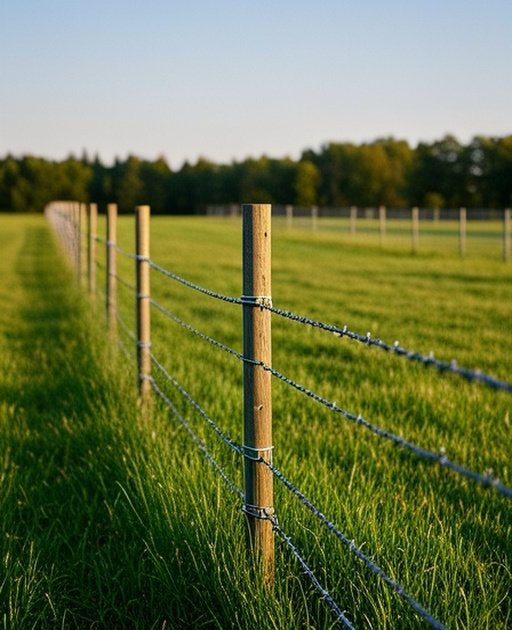
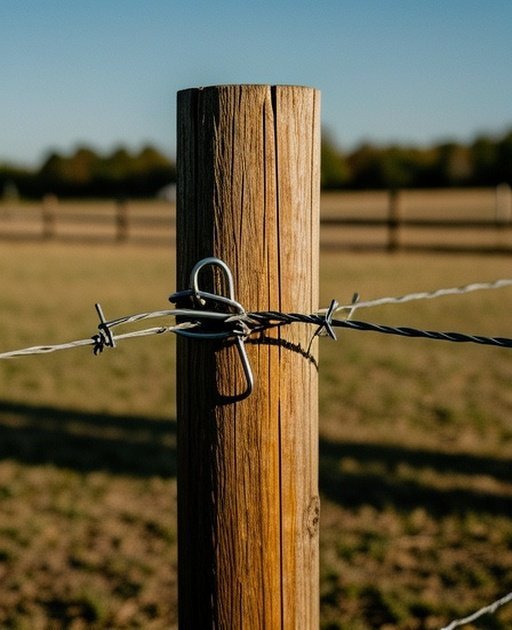
Woven wire fencing, often called field fence, is one of the most versatile and widely used livestock fencing systems. It provides strong physical containment through interwoven horizontal and vertical wires, making it ideal for cattle, sheep, goats, and mixed livestock operations.
YouTube search query: “how to install woven wire field fence step by step tutorial”
What This Guide Covers
What Is Woven Wire / Field Fence?
Woven wire fence (also called field fence, stock fence, or farm fence) is made from horizontal line wires and vertical stay wires woven together in a grid pattern. The wires are connected at each junction by a specific knot — either a fixed knot (which holds wire position under pressure) or a hinged/hinge-joint knot (which allows some movement). Standard specifications use 12.5-gauge line wires with 14 or 16-gauge stay wires, in heights from 26 to 60 inches.
The spacing pattern is described by numbers like '6-39-6' — meaning 6-inch maximum opening, 39-inch height, and 6-inch vertical stay spacing. Bottom openings are smaller than top openings to prevent small animals from passing through at the base while containing larger ones at the top. Fixed-knot woven wire maintains consistent spacing under pressure and is preferred for goats and sheep; standard knotted wire is adequate for cattle.
Is Woven Wire Fence Good for Cattle, Goats, or Sheep?
Woven wire is excellent for all three species, with different specifications appropriate for each. For cattle, standard field fence (6-inch spacing, 47 or 52 inches tall) with a top strand of barbed wire provides secure containment — the woven wire physically prevents passage while the barbed top strand deters leaning. For goats, fixed-knot woven wire with 4-inch maximum spacing is necessary; standard field fence openings are wide enough for goats to push through.
For sheep, no-climb horse fence (2×4 inch openings) provides the tightest containment and best predator exclusion, but costs significantly more than standard field fence. Fixed-knot field fence with 6-inch top spacing and 4-inch bottom spacing is a practical alternative for operations where no-climb fence is cost-prohibitive. Always ensure the bottom wire contacts the ground for sheep and goat applications.
What Gauge Woven Wire Fence Is Best?
For permanent livestock fencing, 12.5-gauge line wires with 14-gauge stay wires is the standard minimum specification. Lighter gauges (15.5 or 16-gauge stay wires) cost less initially but stretch more under livestock pressure and don't maintain consistent opening sizes. Heavy-duty specifications with 11-gauge line wires and 12.5-gauge stays provide maximum longevity (25–35 years) for high-pressure applications near feeding areas or gates.
Galvanizing quality matters as much as gauge — Class 1 galvanizing provides 10–15 years of corrosion resistance, while Class 3 (triple-galvanized) lasts 20–30 years. In coastal or high-humidity environments, always specify Class 3 galvanizing. Aluminum-coated wire offers superior corrosion resistance to zinc galvanizing but is harder to find and costs significantly more.
Woven Wire vs Welded Wire: Which Is Better?
Woven wire and welded wire serve different applications. Woven wire is appropriate for large livestock perimeter fencing — it's flexible enough to follow terrain, available in long rolls (330 feet standard), and provides containment strength through wire tension rather than weld-point strength. Welded wire is better suited for small animal enclosures (poultry runs, garden borders, small pens) where the rigid structure provides security against smaller predators.
For perimeter livestock fencing, woven wire wins on cost per linear foot, flexibility in terrain, and roll length. For predator-proof small animal enclosures, welded wire with small mesh (1×2 inch or 2×4 inch) wins on security because the rigid structure resists bending and pulling. Welded wire joints can fail under sustained livestock pressure that woven wire handles easily.
Woven Wire vs High-Tensile Fence
The comparison between woven wire and high-tensile smooth wire is essentially terrain adaptability and predator exclusion versus cost and post efficiency. High-tensile wire uses 30-foot post spacing; woven wire needs 8–12 foot spacing to maintain tension without sagging. On flat to gently rolling terrain, high-tensile wins on installation cost and low maintenance. On hilly terrain with predator pressure and mixed livestock, woven wire provides better all-around performance.
Many operations combine both: high-tensile smooth or electric wire for flat back-pasture perimeters where cost is paramount, transitioning to woven wire near barn areas, high-predator zones, and anywhere goats or sheep require tighter openings. This hybrid approach optimizes cost across different areas of the property based on the specific containment requirements and terrain of each zone.
What Is Woven Wire / Field Fence?
Woven wire fence, also known as field fence or stock fence, consists of horizontal line wires interwoven with vertical s
For sheep and goats, invest in fixed-knot woven wire with maximum 4-inch openings, 47–52 inches tall, with the bottom wire staked to the ground every 6 feet. Add a hot electric strand inside at 12 inches from the ground to prevent rooting and fence-climbing. This combination is the most reliable non-electric containment for these escape-prone animals and will last 20–25 years with proper installation.
Budget $5–$8 per linear foot installed for this specification, or $3–$5 for materials-only DIY installation. Corner and end brace construction is the most critical skill point — improperly braced corners fail within 1–3 years as wire tension pulls posts inward. Use 8-inch diameter posts set 3.5 feet deep with proper H-brace construction at every corner and 1/4-mile intervals.
If Terrain Is Uneven or Sloped
Woven wire handles sloped terrain better than high-tensile smooth wire because it can be contoured around terrain dips with shorter post spacing. On slopes steeper than 20%, use 8-foot post spacing rather than 12-foot to maintain consistent tension between posts. At terrain low points, use ground staples or driven pins to hold the fence base to the ground contour.
For very irregular terrain with rocks, trees, and significant grade changes, contract installation from experienced fence crews is worth the premium — proper tensioning and ground contouring on complex terrain is difficult to do well without experience and appropriate equipment. Poor installation on difficult terrain fails within a few years, making the savings on DIY installation illusory.
If You Need Predator-Resistant Fencing
Woven wire offers strong physical containment that can be reinforced with electric offset wires to create highly effective predator barriers.
Woven wire fencing typically ranges from 39–60 inches in height depending on livestock type and predator risk. Cattle fencing commonly uses 47-inch or 52-inch heights, while sheep and goat fencing may use shorter heights with tighter mesh spacing.
Lower mesh openings feature tighter vertical spacing (4–6 inches) to prevent lambs, kids, and small predators from passing through, while upper sections may have wider spacing to reduce material cost. Post spacing usually ranges from 8–12 feet, with closer intervals needed on uneven ground or in high-pressure areas. Proper height selection reduces escape attempts and predator entry risk.
Safety Factors
Unlike barbed wire, woven wire provides a smooth containment surfacewith no sharp barbs, significantly reducing cuts and injury risk for all livestock types. However, improper mesh sizing can cause head entrapment in goats if vertical spacing is too wide—animals may push their heads through but be unable to withdraw.
Choosing appropriate vertical spacing based on the smallest animals in your operation is critical for safety. Woven wire also poses less danger to wildlife, pets, and people who may contact the fence compared to barbed alternatives.
Cost & Maintenance
Woven wire has higher upfront material cost than barbed wire—typically 60–100% more per linear foot—but often requires fewer repairs and less frequent maintenance over its service life. Galvanized coatings resist rust and corrosion, extending lifespan to 20+ years in most climates and 30+ years with premium materials.
Long-term maintenance costs include occasional post straightening, replacing damaged mesh sections, vegetation control, and rust treatment in high-moisture areas. For lifecycle cost analysis and budgeting tools, see the Fence Cost & Budgeting guide.
Installation Complexity
Woven wire installation requires strong corner braces, tensioning tools, and proper stretching technique to achieve optimal performance. Poor installation leads to sagging, gaps at ground level, and premature structural failure.
Corner and gate posts must be set deeper (30–36 inches minimum) and braced more heavily than line posts because they carry the full tension load from the mesh. Proper tensioning technique prevents over-tightening that can damage the mesh or under-tensioning that allows sagging. For installation guidance, see the Fence Planning Basics guide.
Legal & Boundary Considerations
Local fence regulations may specify minimum height requirements, construction standards, or material types for livestock containment. Some jurisdictions require specific setbacks from property lines, roads, or waterways that affect fence placement.
Shared boundary fences between neighbors may have legal requirements regarding cost sharing, maintenance responsibilities, and design approval. Always verify local ordinances and property line locations before installation to avoid costly disputes or non-compliance issues.
Yes, woven wire provides continuous physical containment through its interwoven mesh structure and is generally stronger and more secure for mixed livestock than barbed wire’s strand-based design.
How long does woven wire fence last?
High-quality galvanized woven wire with proper gauge can last 20–30 years with correct installation and basic maintenance. Premium materials and coatings may exceed 30 years in favorable climates.
Is woven wire safe for goats?
Yes, woven wire is safe for goats if mesh spacing is tight enough (6 inches or less) to prevent head entrapment—a critical safety consideration for this livestock type.
Yes, woven wire has higher upfront material costs—typically 60–100% more per foot than barbed wire—but it often requires less maintenance and provides better long-term value.
Final Recommendations
Woven wire fencing is one of the most versatile livestock fencing systems available, providing strong containment for cattle, sheep, goats, and mixed livestock operations while offering better safety and predator resistance than barbed wire alone.
Choose woven wire if you prioritize durability, animal safety, and long-term performance over initial cost savings. For large acreage cattle-only operations where budget is the primary constraint, barbed wire may reduce initial investment. For rotational grazing flexibility and behavioral training, consider electric fencing systems.
Short Answer For sheep, woven wire fencing is generally better than electric fencing because it provides constant physical containment. Electric fencing can work, but only…
Short Answer Yes, woven wire fence requires maintenance—but far less than many other fencing types when installed correctly. Routine inspections, minor tension adjustments, vegetation control,…
Short Answer Yes—woven wire fence (also called field fence) is generally a very good option for cattle, goats, and sheep when properly selected and installed.…
Explore More Fencing Guides
Find the right fence for your farm — browse by livestock type, material, or project need.