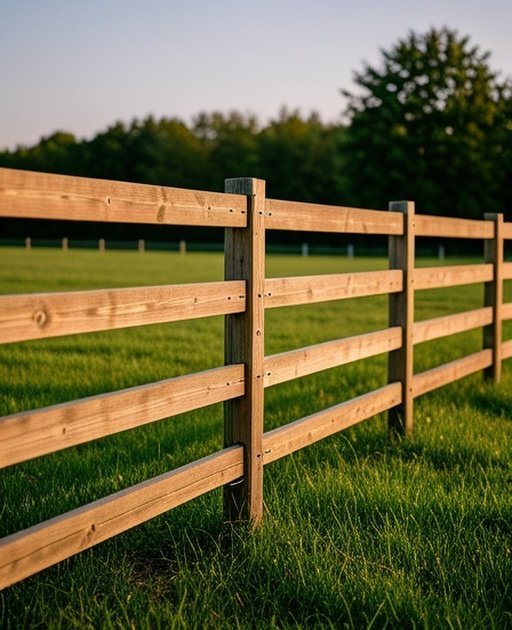
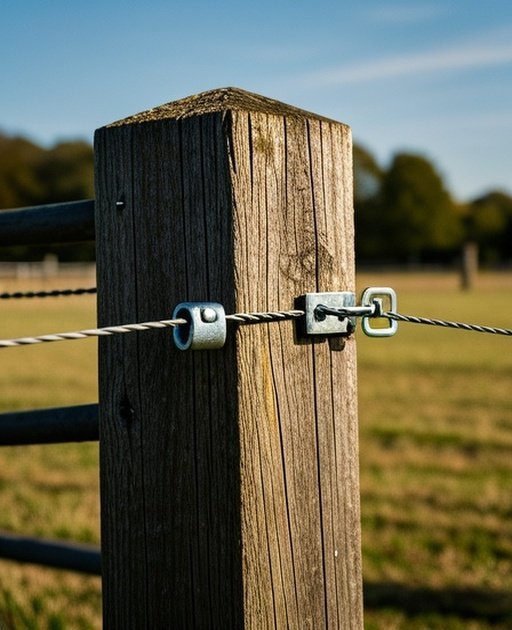
Wood fencing is a traditional and highly visible fencing option used for livestock containment, property boundaries, paddocks, and residential farm settings. Unlike wire-based systems such as barbed wire or high tensile wire, wood fencing offers strong physical barriers, aesthetic appeal, and long-term durability when properly maintained.
YouTube search query: “how to build wood farm fence step by step tutorial”
What This Guide Covers
Types of Wood Fencing for Farms
Farm wood fencing falls into three main categories: board rail (flat boards nailed horizontally to posts), split rail (rough-cut rails in a traditional 2 or 3-rail rustic style), and post-and-board (dimensional lumber rails in 4x4 or 2x6 profiles). Board rail is most common for horses — typically 3 to 4 boards of 1x6 or 2x6 pressure-treated lumber at 48–60 inches total height with posts at 8 feet. Split rail provides rural aesthetics at lower cost but lower containment security. Post-and-board using full-dimensional lumber is the most durable and expensive option.
Wood species selection significantly affects longevity. Pressure-treated pine rated for ground contact (UC4B rating) is the industry standard for posts and lasts 20–30 years in most soils. Black locust is naturally rot-resistant and lasts 40–50+ years without treatment — the premium choice for operations that want maximum post longevity without chemicals. Untreated oak and cedar last 10–15 years in ground contact before requiring replacement.
Is Wood Fencing Good for Livestock?
Wood board rail fencing is excellent for horses and adequate for cattle but impractical for goats, sheep, and pigs without electric wire assistance. For horses, wood's high visibility and smooth surface make it the safest option — horses recognize board rail fencing clearly and rarely collide with it. Wood absorbs impact rather than reflecting force like metal, reducing injury severity when contact occurs.
For cattle, wood rail is effective and durable but expensive relative to wire alternatives. Three-board wood rail contains cattle reliably and presents well aesthetically, but the cost premium ($15–$30 per linear foot installed versus $3–$5 for barbed wire) limits it to high-value operations, show facilities, or fronting fences along roadways where appearance matters. Goats and pigs damage wood boards through chewing and pushing, requiring electric offset strands to preserve fence integrity.
Wood Fence vs Wire Fence
Wood and wire fencing serve different priorities. Wood excels in visibility, safety for horses, aesthetics, and property value presentation. Wire excels in cost per linear foot, coverage per dollar on large acreage, predator exclusion (woven wire), and longevity when properly tensioned. Most large farm operations use wood for road frontage and high-visibility areas, transitioning to wire for back pastures where cost-efficiency outweighs appearance.
Maintenance requirements differ significantly. Wood boards crack, warp, and require replacement every 8–12 years in most climates. Posts last 20–30 years if properly treated and set. Wire fencing, once properly tensioned, requires re-stapling and occasional wire replacement but no regular board replacement. Total lifetime cost over 30 years often favors wire despite lower upfront appearance value.
How Much Does Wood Fencing Cost?
Board rail wood fencing installation costs $15–$30 per linear foot for professionally installed 3-board or 4-board configurations with pressure-treated posts. A 10-acre square parcel (2,640 linear feet) at 3-board specification runs $39,600–$79,200 installed — roughly 5–10x the cost of equivalent wire fencing. Material costs alone for DIY installation run $6–$12 per linear foot for lumber and posts.
Post cost is the largest variable. Black locust or cedar posts cost 2–4x pressure-treated pine but last significantly longer — for operations planning 30+ year ownership, premium post wood reduces total lifetime cost. Vinyl or composite rail systems offer similar appearance to wood at 30–50% higher upfront cost, but eliminate painting, board replacement, and rot issues entirely.
Best Wood Types for Fence Posts
Pressure-treated Southern yellow pine rated UC4B (for ground contact) is the standard fence post material in most regions — affordable, widely available, and reliable for 20–30 years when properly set. The treatment preservative (typically copper-based) prevents rot and insect damage. Posts should be 5–6 inches diameter for line posts and 6–8 inches for corners and braces.
Black locust is the premium naturally rot-resistant option — old locust posts pull out of the ground after 40+ years still solid at the core. It's harder to source than treated pine and requires specific equipment to drive (extremely hard wood), but operations that can find local supply often prefer it for its longevity and chemical-free nature. Osage orange (hedge apple) is similarly long-lived in the regions where it's available — the wood is almost impervious to rot and insect attack.
Types of Wood Fencing for Farms
Wood fencing for farms encompasses several distinct styles, each with specific advantages for different applications.
For maximum curb appeal along road frontage or property perimeters visible from the road, 3 or 4-board white-painted wood rail is the classic premium choice. Vinyl rail achieves the same appearance without painting and outlasts wood boards, at 30–50% higher upfront cost. Many operations use vinyl for road-facing sections (eliminating painting maintenance) and pressure-treated wood for back areas where appearance is less critical.
Stain-treated wood (brown or grey stain rather than white paint) requires less frequent maintenance than painted wood — paint requires recoating every 5–7 years, while stain penetrates wood and lasts 8–12 years. For large quantities of fencing, the maintenance labor difference over 30 years is substantial.
If You Are Fencing Horses
For horse applications, 3 or 4-board rail fence with 2x6 or 2x8 boards at 54–60 inches total height is the standard recommendation for most breeds. Board spacing should prevent horses from getting heads under the bottom rail (12 inch minimum clearance from ground to bottom board). Kickboards — a low, heavy horizontal board along the inside bottom of the fence — protect the posts from kick damage in high-traffic areas.
Add a strand of electric fence inside the top board at chest height to prevent horses from leaning on and eventually cracking boards. This single addition dramatically extends the life of wood board fencing in horse operations by eliminating the primary cause of board damage — horses leaning against the top rail.
If You Want Aesthetic Farm Boundaries
Wood fencing offers superior aesthetic appeal and high visibility compared to wire systems, making it ideal for farm ent
Wood fencing height typically ranges from 4–6 feet depending on livestock type and containment objectives. Horse fencing commonly uses 4.5–5 foot heights with 3–4 horizontal boards, while cattle may be adequately contained by 4-foot fencing. Taller fences improve containment and visibility but increase material and labor costs proportionally.
Post spacing usually ranges from 6–8 feet for board fencing to maintain structural strength without excessive sagging. Post and rail systems can sometimes use 8–10 foot spacing if rails are sufficiently thick. Closer spacing increases cost but improves strength and reduces rail sagging over time.
Safety Factors
Wood fencing is generally safer than barbed wire for horses and small livestock because it provides smooth surfaces and excellent visibility. However, splintering boards create sharp edges that can cause cuts, and protruding nails or screws pose puncture risks that must be addressed immediately.
Regular inspection and prompt repairs prevent minor issues from becoming serious hazards. Rounding or capping post tops prevents water accumulation that accelerates rot. Proper board spacing (typically 6–8 inches apart) prevents animals from getting heads or limbs caught between boards.
Cost & Maintenance
Wood fencing often has the highest upfront cost among common livestock fencing systems—typically $8–$30 per linear foot installed compared to $1–$4 per foot for wire systems. However, the superior aesthetics and safety features may justify the investment for specific applications like horse paddocks or prominent boundaries.
Ongoing maintenance includes staining or sealing every 2–4 years at $1–$3 per linear foot, replacing damaged boards periodically, and treating or replacing posts as they deteriorate. Total ownership costs over 20 years can significantly exceed initial installation costs. For lifecycle cost analysis, see the Fence Cost & Budgeting guide.
Installation Complexity
Wood fencing installation is more labor-intensive than wire systems, requiring digging properly sized post holes (typically 8–12 inches diameter, 30–36 inches deep), setting posts level and aligned with concrete or tamped fill, cutting and fitting horizontal rails or boards precisely, and securing everything with appropriate fasteners.
The work demands basic carpentry skills, proper tools including post hole diggers or augers, levels, saws, and power tools for efficient construction. Professional installation adds significant cost but ensures quality workmanship. For installation guidance, see the Fence Planning Basics guide.
Legal & Boundary Considerations
Local zoning laws may regulate fence height, style, setback distances, and appearance, particularly in areas transitioning from rural to residential development. Some jurisdictions restrict certain fence types near public roads or require specific designs that maintain rural character.
Always confirm property boundaries through survey before installing permanent wood fencing to avoid expensive disputes or required fence relocation. Shared boundary fences may require neighbor agreement on design, cost sharing, and maintenance responsibilities. For legal planning guidance, see the Local Fence Laws & Regulations guide.
Wood fencing provides stronger physical barriers, superior visibility, and traditional aesthetic appeal but costs more and requires ongoing maintenance compared to wire systems.
Yes, properly installed wood board fencing is considered one of the safest and most effective options for horses due to excellent visibility, strong containment, and minimal injury risk.
Does wood fencing require maintenance?
Yes, regular maintenance including sealing, staining, and periodic board replacement is necessary for longevity—typically every 2–4 years for protective treatments.
Wood fencing is ideal for farms seeking durable, visible, and aesthetically pleasing boundaries, particularly for horse paddocks and property perimeter fencing where appearance, safety, and traditional farm character are priorities. The superior visibility and strong physical barriers justify the investment in high-value applications.
However, wood fencing requires ongoing maintenance and significantly higher upfront investment compared to wire systems. Evaluate your budget, livestock type, property size, maintenance capacity, and long-term goals before choosing wood fencing over barbed wire, woven wire, or high-tensile alternatives.
PVC & Plastic Fencing Guide Overview PVC and plastic fencing systems are popular for farms, horse paddocks, residential rural properties, and perimeter boundaries where appearance,…
Fence Cost & Budgeting Guide Overview Fence cost planning is one of the most important stages in any livestock or property fencing project. Material selection,…
Short Answer Wire fencing is generally better for large-scale farms due to lower cost, flexibility, and reduced maintenance, while wood fencing is better for visibility,…
YouTube search query: “how to build wood farm fence step by step tutorial”
Explore More Fencing Guides
Find the right fence for your farm — browse by livestock type, material, or project need.