📋 Fencing Guides

Fence Cost & Budgeting Guide

Fence Cost & Budgeting Guide

Overview

Fence cost planning is one of the most important stages in any livestock or property fencing project. Material selection, post spacing, terrain, labor requirements, and long-term maintenance all directly affect total project cost per foot or per acre.

This guide explains how to estimate fencing costs accurately, compare different fence systems including woven wire, barbed wire, electric, and wood fencing, calculate labor and equipment expenses, and plan for long-term maintenance budgeting.

It is designed for farmers, ranchers, and landowners planning new fence installations or upgrading existing systems. This page focuses on budgeting strategy and cost comparison—not step-by-step installation details.

YouTube search query: “how to calculate livestock fence cost per acre”

What This Guide Covers

How to Estimate Fence Material Costs

Accurate fence material estimation starts with total linear footage of fence, then multiplies by per-foot material cost for the chosen fence type. Calculate total perimeter using a property map, measuring tape, or GPS device — then add interior cross-fence runs. For standard barbed wire (4-strand), material costs run $0.50–$1.00 per linear foot; for woven wire field fence, $1.00–$2.00 per foot; for high-tensile wire, $0.30–$0.60 per foot. Add 10% for waste, corners, and splices.

Separate materials into categories: wire or mesh, posts (corner/line/T-posts), fasteners, gates, and accessories. Getting quotes from multiple suppliers reveals where costs vary most — wire prices are relatively consistent, but post prices vary significantly. Create a spreadsheet with quantities and unit costs before purchasing to avoid underestimating any category.

Labor Costs: DIY vs Hired Contractors

Contractor-installed fence typically costs 50–100% more than material cost alone. Labor rates for fence contractors range from $15–$30 per linear foot all-in for standard woven wire or barbed wire fence in most regions. Complex terrain, long travel distances, or specialized materials push costs higher. Always get three quotes for significant fence projects — contractor pricing varies widely.

DIY installation is feasible for most fence types with basic equipment and moderate physical fitness. Renting a tractor-mounted post driver costs $150–$300 per day and sets 50–100 posts per hour versus 4–8 posts per hour by hand. Renting equipment for a weekend typically pays for itself in labor savings on any fence run over 500 feet. Most first-time fence builders underestimate time by 30–50%.

Hidden Costs in Fence Projects

Post setting in rocky or hard ground requires rental of pneumatic or hydraulic equipment not needed in normal soil — add $200–$500 for equipment rental in difficult conditions. Delivery charges for heavy materials from distant suppliers can add $200–$600 to total cost. Permit fees for fences along public roads or in regulated areas add $50–$500 depending on jurisdiction.

Clearing vegetation from the fence line before installation is a significant labor input often omitted from initial estimates — plan for 2–4 hours of clearing per 1,000 feet of fence line in brushy or wooded areas. Gate hardware costs more than most people expect: a quality double gate set costs $150–$400 in hardware alone. Budget gates at $300–$600 each including hardware and posts.

Cost Comparison by Fence Type

Fence costs vary dramatically by type even for the same total length. For a 1-mile perimeter: 4-strand barbed wire installed runs $8,000–$14,000; high-tensile electric installed runs $5,000–$9,000 (plus energizer); woven wire field fence installed runs $15,000–$25,000; no-climb horse fence installed runs $18,000–$30,000; board fence (3-rail) installed runs $25,000–$45,000. High initial cost often correlates with lower maintenance and longer lifespan.

Calculate cost per year of service rather than just installation cost. Barbed wire installed at $11,000 lasting 20 years costs $550/year. High-tensile electric installed at $7,000 plus $500 in energizer costs, lasting 30 years, costs $250/year. The lowest installed cost is rarely the lowest long-term cost — factor in annual maintenance and expected service life when comparing options.

Prioritizing Fence Projects on a Budget

When total fencing needs exceed available budget, prioritize by function. First priority: fencing that keeps livestock off roads or neighboring properties (liability and safety). Second priority: fencing that separates livestock from hazardous areas. Third priority: perimeter fencing for basic containment. Fourth priority: interior cross-fencing for rotational grazing or herd separation.

Phased fencing allows large projects to spread over multiple years. Establish the perimeter in year one, add interior cross-fencing as budget allows. Temporary electric fencing provides interior division capability at minimal cost while permanent interior fencing is planned. USDA EQIP provides cost-share funding of 50–75% for qualifying fence projects supporting environmental stewardship — contact your local NRCS office for current rates.

Cost Per Acre Calculator Basics

Fence cost per acre calculations begin with determining perimeter length based on property dimensions—a square 40-acre p

Read more →
📐

Woven Wire Fence Cost Breakdown

Woven wire fence cost typically ranges from $1.50–$3.50 per linear foot for materials (wire mesh, posts, staples, bracin

Read more →

Barbed Wire Fence Cost

Barbed wire fence cost represents one of the most economical livestock fencing options, typically ranging from $0.50–$1.

Read more →
🐎

Electric Fence Cost Comparison

Electric fence cost varies significantly between permanent high-tensile systems ($1.50–$4.00 per foot installed) and por

Read more →
🌿

High-Tensile Wire Cost Analysis

High-tensile fence cost typically ranges from $1.50–$3.50 per linear foot installed, offering economical long-distance f

Read more →
🔧

Wood Fence Cost Guide

Wood fence cost for livestock applications typically ranges from $3.00–$12.00 per linear foot installed depending on des

Read more →
💰

PVC & Vinyl Fence Pricing

PVC and vinyl fence pricing ranges from $12–$35 per foot for materials and $8–$15 per foot for installation, totaling $2

Read more →
📋

Predator-Proof Fence Cost

Predator-proof fence cost typically adds 30–80% to base fencing expenses through additional materials including buried m

Read more →
🏗️

Labor & Equipment Costs

Labor and equipment costs represent 40–70% of total project expenses depending on fence type and installation complexity.

Read more →
🛡️

Maintenance & Lifecycle Cost

Maintenance and lifecycle cost significantly impacts total ownership expenses over 15–30 year fence lifespans.

Read more →
📏

Gate & Access Point Costs

Gate and access point costs add $200–$2,000 per opening depending on width, materials, and automation requirements.

Read more →
🌾

Surveying & Planning Costs

Surveying and planning costs range from $300–$2,000 depending on property size, boundary complexity, and legal requirements.

Read more →
🔍

Terrain Impact on Fence Costs

Terrain impact on fence costs can increase project expenses by 20–100% on rocky, steep, or heavily wooded land.

Read more →
📐

Financing & Grant Options

Financing and grant options help landowners fund fencing projects through various programs.

Read more →

DIY vs Professional Installation Cost

DIY versus professional installation presents significant costtrade-offs.

Read more →
🐎

Seasonal Cost Variations

Seasonal fence cost variations affect both material availability and labor rates.

Read more →
Common Decision Scenarios

If budget is very limited

For extreme budget constraints, a single-strand high-tensile electric fence with step-in posts and a portable solar energizer creates a functional livestock barrier for $0.30–$0.60 per foot in materials. This works for trained cattle and horses in non-critical containment situations — it doesn't deter predators and requires training before livestock will respect it, but costs a fraction of any physical fence option.

Supplement a minimal electric fence with used or salvaged materials where quality can be inspected. Used T-posts, recycled lumber for gate posts, and donated woven wire significantly reduce material costs. Many operations starting out use minimal materials combined with intensive monitoring until the operation generates revenue to invest in permanent fencing.

If you're financing a fence project

USDA EQIP provides cost-share funding of 50–75% for qualifying fence projects. Applications are competitive and tied to annual funding cycles, but accepted projects significantly reduce net fence cost. Agricultural lenders finance fence as a capital improvement at rates typically 1–2% below unsecured lending — fence life of 20–30 years supports multi-year financing terms.

Frame fence investment in a business plan showing how rotational grazing or predator exclusion generates return. A flock of 200 ewes losing 5% annually to predators ($2,000/year in losses) can justify $20,000 in woven wire predator fence that pays back in 10 years through loss reduction alone — not counting the improved grazing management value of better cross-fencing.

If You Need a Low-Cost Perimeter Fence

Barbed wire or multi-strand high-tensile systems reduce upfront costs to $1.25–$4.00 per foot installed compared to $3.00–$8.00 for woven wire.

Read more →
📐

If Predator Pressure Is High

Woven wire with electric offsets increases costs by 40–80% over basic fencing but provides essential protection for valu

Read more →

If Terrain Is Uneven

Extra posts and bracing increase costs by 20–100% on rocky or sloped land compared to flat terrain.

Read more →
🐎

If You Want Minimal Maintenance

High-tensile and properly braced systems reduce long-term maintenance expenses through superior durability and minimal adjustment requirements.

Read more →
🌿

If You Run Rotational Grazing

Portable electric netting reduces permanent installation costs while providing flexible paddock management.

Read more →

Key Design & Planning Considerations

Fence Height & Spacing

Taller fences require more material and stronger bracing, increasing costs proportionally. A 5-foot woven wire fence costs 15–25% more than 4-foot versions. Tight post spacing increases post count and installation labor—optimizing spacing for terrain and livestock needs controls expenses.

Species-specific height requirements balance containment effectiveness with budget constraints. For height and spacing guidance, see the Wire Spacing Chart.

Safety Factors

Barbed wire may be cheaper but creates injury risks for some livestock—veterinary expenses from wire injuries can exceed the savings from low-cost materials. Electric fencing requires energizer investment ($100–$600) and grounding components ($50–$200).

Balance initial costs against potential livestock injury expenses and liability risks. For safety considerations, see the Electric Fence Safety guide.

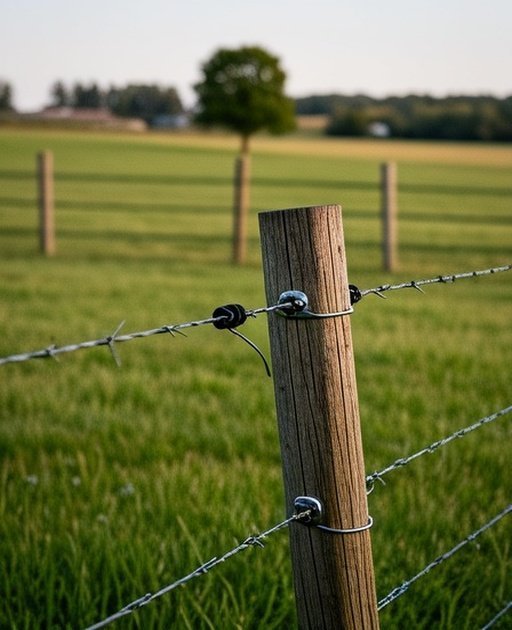
Rural agricultural pasture with a well-installed fence system, including evenly spaced pressure-treated wooden posts, three horizontal high-tensile galvanized wire strands, black insulators, metal tension brackets, lush green pasture grass in the foreground, and a distant tree line in the background.

Cost & Maintenance

Initial installation represents only 50–70% of total ownership costs over 20–30 year fence lifespans. Long-term vegetation control ($100–$500 annually), periodic repairs ($200–$1,000 every 5–10 years), and eventual component replacement significantly impact lifecycle budgets.

Low-maintenance systems like high-tensile wire or PVC fencing cost more initially but reduce ongoing expenses. For comprehensive cost planning, include 15–30 year projections.

Installation Complexity

Woven wire and wood fencing require more labor and technical skill compared to high-tensile or electric systems. Complex installations increase labor costs by 30–100% and extend project timelines.

Evaluate DIY capabilities realistically—mistakes on complex projects often cost more to repair than professional installation would have cost initially. For installation planning, see the DIY vs Professional guide.

Legal & Boundary Considerations

Boundary disputes and zoning regulations can increase planning and surveying expenses by $500–$3,000. Professional surveys prevent costly fence relocation if boundary errors are discovered after installation.

Permit fees ($50–$500) and regulatory compliance requirements vary by jurisdiction. Budget for these administrative costs during project planning to avoid surprises. For legal planning, see the Local Fence Laws guide.

Related Fence Systems

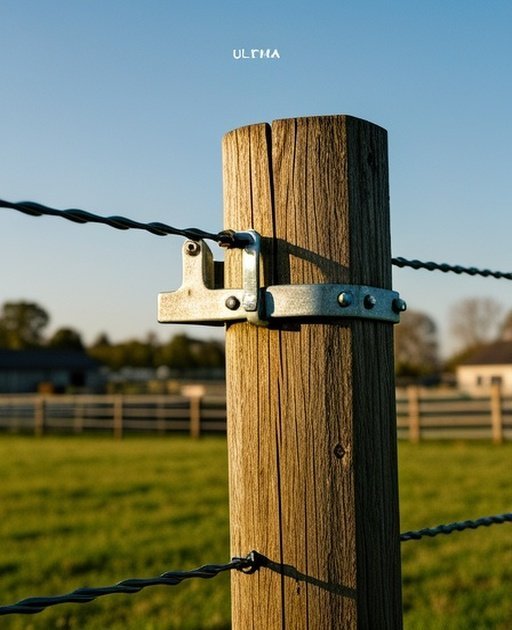
Ultra-realistic close-up of a fence post in an outdoor agricultural pasture with natural daylight, showing the post's material, an attached wire, a metal bracket, and a clear hardware connection point

Frequently Asked Questions

How much does fencing cost per acre?

Costs vary by material and terrain, typically ranging from $800–$2,000 per acre for low-cost barbed wire systems to $2,500–$6,000 per acre for woven wire or wood fencing.

What is the cheapest livestock fence option?

Multi-strand barbed wire or high-tensile electric fencing generally has the lowest material cost at $1.25–$4.00 per foot installed.

Is woven wire more expensive than electric fencing?

Yes, woven wire usually has higher upfront costs ($3.00–$8.00 per foot) compared to electric systems ($1.50–$4.00 per foot) but lower reliance on energizers and power sources.

How do I reduce fence installation cost?

Optimize post spacing for terrain and livestock needs, choose cost-efficient materials appropriate for your application, consider DIY installation for simpler systems, and implement phased installation spreading costs across multiple seasons.

What affects long-term fence maintenance cost?

Vegetation control, wire tension adjustments, broken post replacement, and weather damage all influence lifecycle expenses—high-tensile and PVC systems require less maintenance than wood or barbed wire.

Final Recommendations

Fence budgeting requires balancing upfront material costs with long-term maintenance, durability, and livestock safety. While low-cost systems like barbed wire reduce initial investment, they may require more frequent maintenance or upgrades compared to high-tensile or PVC systems.

Choose materials based on livestock type (cattle, sheep, goats), predator pressure, terrain conditions, and labor availability. Consider financing options and seasonal timing to optimize project economics.

Use this guide as your budgeting foundation before selecting a specific fencing system. Calculate costs per acre, compare DIY versus professional installation, and include gates and planning expenses for accurate total project estimates.

Explore More Fencing Guides

Find the right fence for your farm — browse by livestock type, material, or project need.

Browse Livestock Guides Compare Materials