Permanent Electric Fencing Guide
Overview
Permanent electric fencing systems are designed for long-term livestock containment and perimeter security. Unlike temporary polywire or portable netting setups, permanent systems use high-tensile wire, strong corner bracing, durable insulators, and properly grounded energizers to deliver consistent voltage year-round.
This Permanent Electric Fencing Guide explains how to design, install, and maintain multi-strand high-tensile electric fence systems for cattle, sheep, goats, and predator control. It covers post spacing, wire tensioning, grounding requirements, energizer sizing, cost planning, and long-term durability considerations.
This guide focuses specifically on permanent electric fence systems—not temporary grazing fences or portable netting. For complete installation procedures, see the Electric Fence Installation Guide. For power system selection, review the Electric Fence Chargers & Energizers Guide.
YouTube search queries: “permanent high tensile electric fence installation tutorial” or “how to build permanent electric fence for cattle”
What This Guide Covers
What Makes Electric Fence Permanent vs Portable
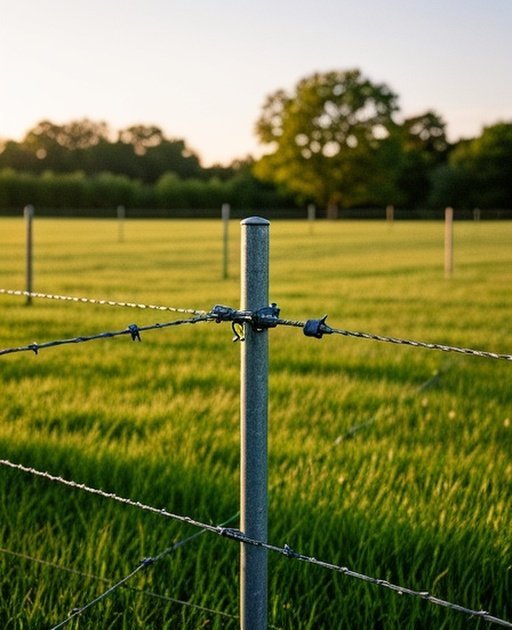
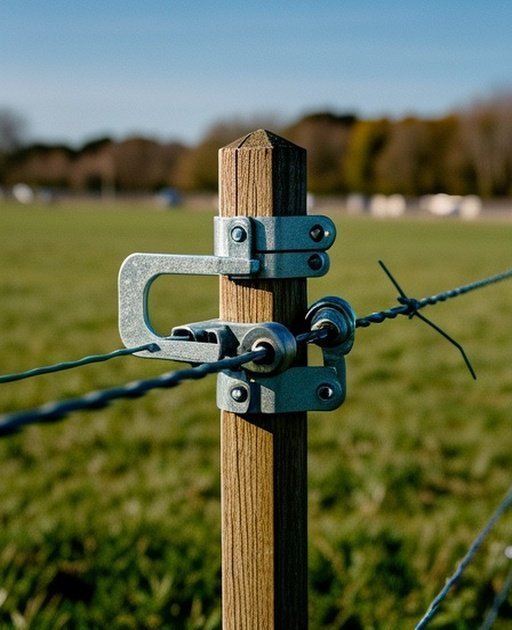
Permanent electric fence uses driven wooden posts or concrete-set anchor posts at regular intervals, high-tensile wire rated for 25–30 year service, quality UV-stabilized insulators, and a fixed energizer installation with proper grounding. The distinction from portable fence is durability, investment level, and expectation of service life measured in decades. Permanent electric fence, once installed correctly, requires primarily vegetation management and annual inspection rather than assembly and disassembly.
The foundation of permanent electric fence is the corner and brace post system — each change in fence direction requires a corner post set 36–42 inches deep with an H-brace extending 6–8 feet along each fence run. These structural elements are what distinguish permanent from temporary installation. A permanent fence without adequate corner bracing is temporary fence in permanent materials — it will fail within 2–3 seasons as wire tension pulls the unbraced corners inward.
High-Tensile Wire for Permanent Electric Fence
High-tensile wire (12.5 gauge, 170,000 PSI minimum tensile strength) is the wire of choice for permanent electric fence. At 200–250 pounds of tension, it spans 200+ feet between posts without sagging — dramatically reducing post requirements versus standard wire. The wire's high strength means it resists breaking from impact, wildlife, or vegetation pressure that would snap standard wire. A properly installed high-tensile fence installed in the 1980s still functions on many farms today.
In-line strainers (ratcheting tensioners) installed every 400–600 feet allow seasonal tension adjustment without cutting the wire. Tension the wire to specification during installation, then loosen in-line strainers in fall (before winter cold contracts the wire) and re-tighten in spring (before summer heat expands it). This seasonal adjustment maintains consistent tension without the wire breaking from temperature extremes — a 1-mile fence changes 6–8 feet in length between the coldest and hottest days of the year.
Post Spacing and Materials for Permanent Fence
Standard permanent electric fence post layout: wooden anchor posts (5–6 inch diameter, 8 feet long) at corners, ends, and every 200 feet; T-posts (6.5 feet) at 30–50 foot intervals between wooden posts. This spacing provides adequate wire height support while minimizing post count compared to conventional fence. Higher post density is needed on hilly terrain where the fence line changes grade frequently — reduce T-post spacing to 20 feet on slopes steeper than 10%.
Wooden post species and treatment significantly affect longevity. Pressure-treated southern yellow pine with UC4B or UC4C rating is widely available and lasts 30–40 years in ground contact in most climates. Naturally rot-resistant species (black locust, osage orange, red cedar) can outlast treated lumber in some regions. Round posts resist splitting better than square posts when driven; corner posts should be set in drilled holes with concrete backfill rather than driven.
Energizer Selection for Permanent Installations
Permanent fence energizer selection should account for both current fence and potential future expansion. An energizer that adequately handles 2 miles of current fence will be marginal if the operation adds another mile of perimeter or converts to sheep that require higher voltage. Size permanent energizers at 1.5–2x the current fence requirement to allow for growth and to maintain adequate voltage in worst-case conditions (high vegetation contact, wet conditions, distant fence sections).
AC (mains-powered) energizers are the preferred choice for permanent installations near electrical service — they deliver consistent output regardless of battery charge, provide highest output for the price, and don't require battery replacement. Solar energizers are appropriate for permanent fence where grid power isn't available within 500 feet; budget for a quality solar panel and battery bank (at least 30 amp-hours) that maintains charge through extended cloudy periods common in your region.
Lightning Protection for Permanent Systems
Permanent electric fence on open land is a lightning antenna — the wire spans large areas and provides a conductor that attracts and channels lightning strikes. Unprotected fence and energizers suffer lightning damage multiple times per decade in storm-prone regions. Proper lightning protection is a combination investment: lightning diverters installed on the fence line 300 feet before the energizer, a lightning arrest spike on the energizer itself, and a surge protector on the AC outlet powering the energizer.
Lightning diverters (also called fence lightning arrestors) provide a low-resistance path to ground for lightning current, bypassing the energizer. Install them on the fence line between each fence run entry point and the energizer — one diverter per fence lead connected to the energizer terminal. Quality diverters cost $15–$25 each and should be considered mandatory for permanent fence in lightning-active regions. The cost of one diverter is less than 5% of a typical energizer replacement cost.
Permanent vs Temporary Electric Fencing
The comparison between permanent and temporary electric fencing reveals fundamental differences in structural design, du
Read more →High-Tensile Wire for Permanent Systems
High-tensile wire for permanent electric systems provides the structural backbone of durable installations.
Read more →Corner & End Brace Construction
Corner and end brace construction is the most critical component of permanent electric fence systems.
Read more →Post Spacing for Permanent Electric Fence
Post spacing for permanent electric fence balances structural support with material economy.
Read more →Energizer Sizing for Long Perimeters
Energizer sizing for long perimeters requires higher joule output to maintain adequate voltage across extended fence distances.
Read more →Grounding System Setup
Grounding system setup for permanent installations requires careful attention because inadequate grounding causes more l
Read more →Wire Height & Strand Configuration
The electric fence wire spacing chart provides species-specific recommendations for wire height and strand configuration in permanent systems.
Read more →Cost per Acre Breakdown
Cost per acre breakdown for permanent electric fencing typically ranges from $1.50–$4.00 per linear foot installed, depe
Read more →Vegetation Management Strategy
Vegetation management strategy for permanent installations prevents shorts that drain voltage and reduce shock effectiveness.
Read more →Lightning Protection for Permanent Systems
Lightning protection for permanent systems is essential because extended fence lengths act as lightning attractors during storms.
Read more →