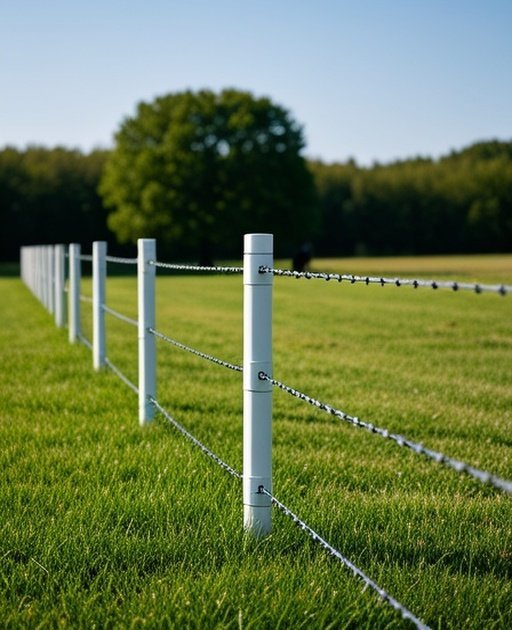
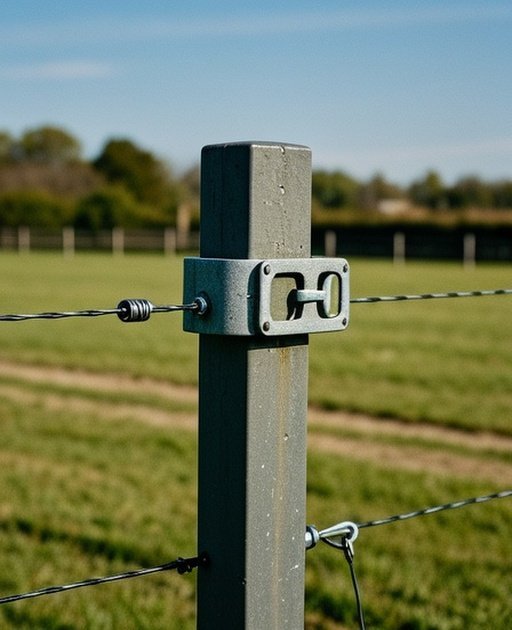
PVC and plastic fencing systems are popular for farms, horse paddocks, residential rural properties, and perimeter boundaries where appearance, low maintenance, and weather resistance are priorities. Unlike wood fencing, PVC does not rot, splinter, or require staining, making it attractive for long-term installations.
This PVC & Plastic Fencing Guide explains the different types of vinyl fencing, cost comparisons, durability expectations, installation requirements, livestock suitability, and long-term maintenance considerations. It also compares PVC fencing to wood, wire, and electric fencing systems.
YouTube search query: “how to install pvc vinyl farm fence step by step tutorial”
What This Guide Covers
What Is PVC / Vinyl Fencing?
PVC (polyvinyl chloride) livestock fencing is manufactured from hollow or solid plastic extrusions formed into posts, rails, and boards that mimic the appearance of painted wood. High-quality vinyl fence for livestock uses UV-stabilized, impact-modified PVC that resists brittleness from sun exposure and flex-fatigue from impact. Rail profiles are typically 3-4 inches wide and 1.5-2 inches thick — thicker and wider than wood boards to compensate for PVC's lower rigidity.
The primary driver for vinyl fencing in livestock applications is appearance and low maintenance — white vinyl rail provides the classic horse-farm aesthetic without painting, staining, or board replacement. Premium vinyl fence is manufactured with titanium dioxide for UV stabilization and recycled PVC fiber reinforcement for impact resistance. Avoid the cheapest vinyl products: underfilled or thin-walled profiles become brittle and shatter in cold temperatures.
PVC Fencing vs Wood Fencing
PVC and wood board rail fencing appear similar but have meaningfully different performance profiles. Wood is stiffer and stronger in the rail itself — a 2×6 inch oak board resists kick-impact better than a hollow vinyl rail of similar profile. PVC wins on maintenance: no painting (ever), no rot, no splinter risk, and rail surfaces too slippery for horses to crib on. The choice is primarily between long-term maintenance cost (wood loses) and impact strength (wood wins).
Cost comparison: pressure-treated wood 3-board rail runs $12–$18 per linear foot installed; comparable vinyl runs $18–$30 per linear foot. Over a 30-year ownership period, the elimination of painting (every 5–7 years at $1–$2 per linear foot per coat) and board replacement (every 10–15 years) can make vinyl comparable or lower in total cost despite higher upfront expense. Operations that manage multiple miles of fencing find the maintenance savings significant.
Is PVC Fencing Good for Horses?
PVC is widely used and generally effective for horse containment with appropriate specifications. High-quality impact-modified vinyl rail handles equine contact well — horses bump into fences and occasionally kick boards, and quality vinyl flexes on impact rather than shattering. The smooth, bright white surface maximizes visibility, which is critical for horse safety. Horses can see white vinyl rail clearly even in low light, preventing the collision injuries that dark or thin-wire fencing causes.
The limitation of vinyl for horses is rail strength — hollow vinyl rails can snap under direct kick impact, leaving jagged edges that create injury risk. Most vinyl horse fence manufacturers address this by inserting an aluminum or steel reinforcing channel inside the rail. Specify 'reinforced vinyl rail' or 'insert-reinforced' when purchasing for horse applications. Solid (not hollow) vinyl rail provides better impact resistance but weighs more and costs 40–60% more than hollow profiles.
PVC Fencing Cost per Foot
Vinyl rail fence costs $18–$32 per linear foot professionally installed for standard 3-rail or 4-rail configurations with posts at 8-foot spacing. Material-only costs for DIY installation run $8–$16 per linear foot. Post cost is the largest variable — vinyl fence posts are significantly more expensive than wood or metal alternatives at $25–$60 each versus $8–$20 for treated wood posts of equivalent diameter.
Entry-level vinyl fence products available at big-box retailers are typically residential-grade products not suitable for horse fencing. Farm-grade vinyl fence uses thicker rails, UV stabilization, and impact modification not present in residential products. Specify minimum rail wall thickness of 0.12 inches and UV inhibitor rating for any vinyl fence used in livestock applications.
How Long Does PVC Fencing Last?
Quality farm-grade UV-stabilized vinyl fence has a manufacturer-expected lifespan of 30–50 years for the rail material itself. Posts can last equally long when properly set in concrete or compacted gravel. Unlike wood, vinyl doesn't rot, doesn't require painting, and doesn't harbor insects or moisture. Surface cleaning with a pressure washer and occasional mildew treatment is the primary maintenance requirement.
The failure modes for vinyl fence are UV degradation (turns yellow and brittle in cheap products; prevented by quality UV stabilizers), impact shattering in extreme cold temperatures (prevented by impact modifiers), and rail sag in long horizontal spans (addressed by post spacing no greater than 8 feet). Verify that any vinyl product is rated for the low temperatures typical of your region — quality vinyl remains flexible at -20°F, while cheap products can shatter at 0°F.
What Is PVC / Vinyl Fencing?
PVC and vinyl fencing are manufactured from polyvinyl chloride (PVC) or other plastic polymers engineered to replicate t
Read more →
📐
PVC Fencing vs Wood Fencing
The comparison between PVC and wood fencing reveals important trade-offs in durability, maintenance requirements, initial cost, and long-term value.
Read more →
⚡
Is PVC Fencing Good for Horses?
PVC fencing for horses offers several advantages including smooth surfaces that prevent splinters and reduce injury risk
Installing PVC fence posts requires proper depth, secure anchoring, and accurate alignment to ensure long-term stability and rail fit.
Read more →
💰
PVC Fencing Maintenance Requirements
PVC fencing maintenance is minimal compared to wood systems, requiring only periodic cleaning to remove dirt, mold, or mildew.
Read more →
📋
PVC Fence Strength & Impact Resistance
PVC fence strength and impact resistance varies significantly by product quality, wall thickness, and internal reinforcement.
Read more →
🏗️
PVC vs Woven Wire Fence
Comparing PVC and woven wire fencing involves different priorities—PVC excels in aesthetics, visibility, and maintenance
Read more →
🛡️
When Should You Avoid PVC Fencing?
There are several situations where you should avoid PVC fencing in favor of alternative systems.
Read more →
Common Decision Scenarios
If You Want Low Maintenance Fencing
Vinyl delivers the lowest ongoing maintenance of any fencing material for horse operations. The lifetime maintenance checklist: occasional pressure washing, inspect post caps and hardware annually, tighten any loose brackets, replace any cracked rails. No painting, no staining, no board replacement. For operations managing 500+ feet of perimeter visible from the road, the elimination of painting maintenance alone justifies the upfront premium over wood.
Compare lifecycle cost over 30 years: vinyl at $25/LF upfront with near-zero maintenance versus wood at $15/LF upfront with $3–$5/LF in painting and board replacement every 7–10 years. Over 30 years, wood typically costs $27–$35 per linear foot in cumulative investment versus $25–$28 for quality vinyl. The cost convergence makes the maintenance savings of vinyl compelling even for budget-conscious operations.
If Budget Is Limited
If budget prevents vinyl fence for the entire property, a hybrid approach is common: vinyl for the driveway entrance and front pasture boundary visible from the road (where appearance matters), transitioning to high-tensile electric or treated board fence for back pastures. This provides the property presentation benefits of vinyl at a fraction of the whole-property cost.
Another cost reduction: use wood posts with vinyl rails. Wood posts cost 60–70% less than vinyl posts and are set the same way. Quality vinyl rail attaches to wood posts with standard brackets. This hybrid specification reduces installed cost by 15–25% while maintaining rail appearance and longevity.
PVC fencing heights typically range from 4–6 feet depending on livestock type and perimeter requirements. Horse fencing commonly uses 4.5–5 foot heights with 3–4 horizontal rails spaced 10–16 inches apart. Taller fences improve containment and visibility but proportionally increase material and installation costs.
Rail spacing must prevent animals from pushing through or slipping underneath—bottom rails should be no more than 12 inches above ground for horses and closer for smaller animals. Post spacing of 6–8 feet provides adequate support for most applications, with closer spacing in high-wind areas or for heavier rail configurations.
Safety Factors
PVC fencing offers smooth surfaces without splinters, sharp edges, or protruding nails that characterize wood fencing, making it inherently safer for horses and small livestock. The material’s slight flexibility absorbs impact better than rigid materials, reducing injury severity if animals contact the fence.
However, extreme impact can causecracking, particularly in colder climates where PVC becomes more brittle. Sharp broken edges from damaged rails should be repaired immediately. Quality agricultural-grade PVC includes impact modifiers to reduce brittleness in cold weather.
Cost & Maintenance
PVC fencing usually costs more upfront than wood or wire systems—typically $20–$50 per linear foot installed compared to $8–$30 for wood and $1–$6 for wire alternatives. However, the virtual elimination of ongoing maintenance costs improves long-term value.
Over 20–30 years, total ownership costs including maintenance, repairs, and replacement often favor PVC despite higher initial investment. There is no staining expense every 2–4 years, no board replacement from rot, and minimal repair costs. For lifecycle cost analysis, see the Fence Cost & Budgeting guide.
Installation Complexity
PVC fence installation requires accurate post alignment, secure concrete footings for permanent stability, proper rail insertion into post channels, and attention to manufacturer specifications for expansion gaps. The work demands precision but standard carpentry and masonry skills.
Many PVC systems feature routed posts that accept rails in pre-cut channels, simplifying installation compared to custom-fitted wood systems. However, the material’s inflexibility means mistakes cannot be easily adjusted—careful measurement and layout are essential. For installation guidance, see the Fence Planning Basics guide.
Legal & Boundary Considerations
Some zoning regulations may restrict fence height, style, or color in residential-adjacent areas or historically designated rural zones. White PVC fencing is typically approved in most locations, while colored options may face restrictions in some jurisdictions.
Homeowners association rules in rural residential developments may mandate specific fence types or prohibit certain styles. Always verify property boundaries, setback requirements, and local ordinances before installing permanent PVC fencing. For legal planning guidance, see the Local Fence Laws & Regulations guide.
PVC fencing requires significantly less maintenance and lasts longer than wood, but has higher upfront cost—total ownership costs over 20+ years often favor PVC.
How long does PVC fencing last?
Quality vinyl fencing can last 20–30 years or more depending on product quality, UV protection, and climate conditions—significantly longer than typical wood fencing.
Is PVC fencing safe for horses?
Yes, PVC board fencing provides smooth surfaces that reduce injury risk, excellent visibility, and sufficient flexibility to absorb impact without shattering.
Does PVC fencing crack in cold weather?
In extreme cold (below -20°F), lower-grade PVC may become brittle and crack under impact—quality agricultural PVC includes impact modifiers to reduce cold-weather brittleness.
Is PVC fencing expensive?
PVC typically costs more than wood or wire fencing upfront ($20–$50 per foot installed), but lower maintenance costs improve long-term value over 20–30 year lifespan.
Final Recommendations
PVC and plastic fencing systems are ideal for farms and properties that prioritize low maintenance, clean appearance, and long-term durability over minimal initial cost. They are particularly suitable for horse paddocks, visible perimeter boundaries, and situations where the ongoing burden of wood fence maintenance is undesirable.
However, PVC fencing may not be optimal for heavy livestock operations requiring maximum impact resistance, extreme cold climates without premium products, or large acreage projects where cost per foot is the dominant consideration. Compare PVC systems with wood, woven wire, and high-tensile fencing to determine the best fit for your specific livestock, property characteristics, budget, and maintenance capacity.
Use the linked guides above to evaluate cost, durability, maintenance requirements, and installation complexity before making your final decision. Proper planning, quality product selection, and professional-grade installation will maximize the value and service life of your PVC fence investment.
Composite & Flexible Fencing Guide Overview Composite and flexible fencing systems are modern alternatives to traditional wood and wire fences. They are designed to provide…
Wood Fencing Guide Overview Wood fencing is a traditional and highly visible fencing option used for livestock containment, property boundaries, paddocks, and residential farm settings.…
Permanent Electric Fencing Guide Overview Permanent electric fencing systems are designed for long-term livestock containment and perimeter security. Unlike temporary polywire or portable netting setups,…
Explore More Fencing Guides
Find the right fence for your farm — browse by livestock type, material, or project need.